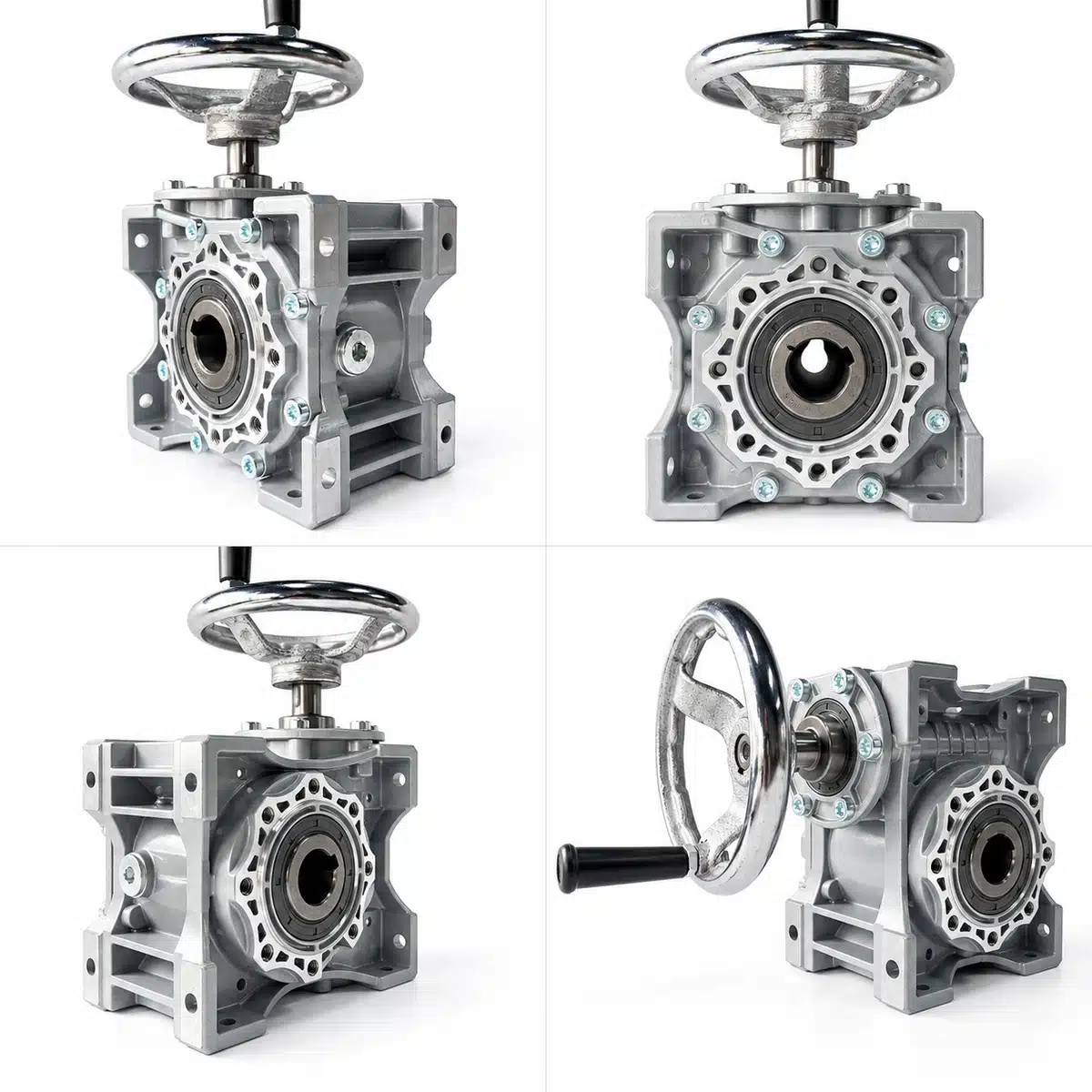
Worm Gearbox Maintenance Guide: Extend Equipment Life and Prevent Costly Downtime
In our 20+ years manufacturing precision worm gearboxes for industrial clients, we’ve seen the same pattern repeatedly: facilities that implement structured maintenance programs achieve 3-5 times longer equipment life compared to those running “fix when broken” approaches.
Worm gearboxes power critical operations—conveyors, packaging lines, mixers, elevators. Their compact design and high torque density make them indispensable. But the sliding mesh that enables these benefits also generates substantial friction and heat. Without proper worm gearbox maintenance, you’re looking at premature failure, unplanned downtime, and replacement costs that could have been avoided.
This guide gives maintenance engineers and facility managers the specific procedures, intervals, and specifications needed to maximize gearbox ROI.
Why Worm Gears Demand Different Maintenance
Unlike helical or spur gears where teeth roll against each other, worm gears slide. This fundamental difference means higher operating temperatures, greater stress on lubricant films, and accelerated wear when maintenance lapses.
The data from our service department is clear: 70% of premature worm gearbox failures trace back to lubrication issues—wrong oil type, contaminated oil, or insufficient oil levels. Temperature-related failures account for another 18%. Both are completely preventable with systematic worm gearbox maintenance.
For model-specific construction, materials, mounting arrangements and technical selection information, refer to our NMRV Series worm gearbox product page.
Lubrication Schedule: Your Primary Defense Against Failure
Initial Break-In: The Critical First 500 Hours
New worm gears undergo a break-in period where microscopic surface irregularities on teeth get smoothed out. This process generates fine metallic particles that contaminate the initial oil fill.
Action Required: Change oil after first 500 operating hours. No exceptions.
We’ve tested gearboxes where clients skipped this break-in oil change. Wear rates in the first year were 40-60% higher compared to units where break-in oil was properly drained and replaced.
Ongoing Inspection Intervals
Weekly (5 minutes):
- Check oil level at sight glass with unit stopped and cooled
- Note any abnormal sounds during operation
- Verify no oil seepage at shaft seals
Monthly (15 minutes):
- Inspect oil color and clarity through sight glass
- Foaming indicates aeration or wrong viscosity
- Milky appearance means water contamination
- Dark/black color signals oxidation or overheating
- Check mounting bolts for looseness
- Clean breather vent
Quarterly (30 minutes):
- Oil analysis (if using synthetics or critical application)
- Infrared temperature scan of housing
- Vibration measurements at bearing locations
- Document all readings for trend analysis
Oil Change Intervals
These intervals assume normal industrial environments (ambient 15-30°C, clean, dry):
Mineral Oils:
- 2,500-4,000 operating hours, or
- 6 months, whichever comes first
Synthetic Oils (PAO-based):
- 5,000-8,000 operating hours, or
- 12-18 months
Synthetic Oils (PAG-based):
- 8,000-10,000 operating hours, or
- 24 months
Harsh conditions require shorter intervals. High ambient temperatures (>35°C), dusty environments, high duty cycles, or wash-down applications can cut these intervals by 30-50%.
Selecting the Right Lubricant: It’s Not Just “Gear Oil”
The bronze worm wheel sliding against a hardened steel worm creates unique lubrication requirements. Standard gear oils formulated for steel-on-steel contact won’t perform adequately.
Viscosity: Getting the Film Thickness Right
Worm gears need higher viscosity oils than other gear types to maintain adequate film thickness under the sliding contact pressures.
Standard Recommendations:
- ISO VG 220: Light-duty applications, low speeds
- ISO VG 320: General industrial use (most common)
- ISO VG 460: Heavy-duty, high-load applications
- ISO VG 680: Very high loads or high ambient temperatures
Always check the gearbox nameplate for manufacturer specifications. Using lower viscosity than specified accelerates wear. Higher viscosity increases friction losses and operating temperature.
Oil Type Comparison
Compounded Mineral Oils:
- Traditional choice for worm gears
- Contain fatty acid additives that improve boundary lubrication on bronze
- Cost-effective
- Limited high-temperature performance (degrades above 80°C)
- Shorter change intervals
Polyalphaolefin (PAO) Synthetics:
- Excellent thermal stability
- Good cold-start performance
- Compatible with most seals and paints
- Can extend drain intervals 2x versus mineral oils
- More expensive than mineral oils
Polyalkylene Glycol (PAG) Synthetics:
- Best performance for worm gears
- Extremely low friction coefficient (improves efficiency 3-8%)
- Exceptional thermal stability (handles 100°C+ continuously)
- Longest change intervals
- Critical warnings:
- NOT compatible with mineral oils (causes sludge)
- Attacks some paints and seals
- Requires complete flush if converting from mineral oil
- Most expensive option
We recommend PAG oils for high-value installations or applications where efficiency gains justify the cost. For standard industrial applications, quality PAO synthetics offer the best performance-to-cost ratio.
The Bronze Compatibility Issue
Worm wheels are typically bronze or brass (“yellow metals”). Some gear oil additives—particularly sulfur-based extreme pressure (EP) additives—chemically attack bronze, causing corrosion and pitting.
Requirement: Verify lubricant is explicitly rated for bronze/brass compatibility. Look for “worm gear” or “yellow metal safe” designations on the product data sheet.
We’ve replaced worm wheels destroyed by chemically incompatible oils. The damage wasn’t from wear—the bronze surface literally corroded away from sulfur attack.
Temperature Monitoring: Your Early Warning System
Worm gears run hotter than other gear types due to sliding friction. Normal operating temperatures range 50-80°C (housing surface temperature). But there are limits.
What Temperature Tells You
Below 50°C: Gearbox may be oversized for the application or oil viscosity too high (excess churning losses)
50-70°C: Optimal operating range for most applications
70-85°C: Acceptable but monitor closely; verify adequate ventilation and proper oil level
85-95°C: Warning zone; investigate cause before damage occurs
Above 95°C: Immediate action required; shut down and identify problem
Temperature Rise Troubleshooting
Sudden temperature increases indicate developing problems:
+10°C rise: Check oil level first, then verify ambient conditions haven’t changed
+15°C rise: Likely causes include bearing wear, shaft misalignment, or lubricant degradation; schedule inspection within 1 week
+20°C+ rise: Critical issue; bearing failure, severe misalignment, or wrong lubricant; shut down and inspect immediately
Cooling Strategies
Standard worm gearboxes rely on housing surface area for heat dissipation. Cooling fins increase surface area but require airflow and periodic cleaning.
Maintenance actions:
- Blow dust/debris from cooling fins monthly (more often in dusty environments)
- Ensure 6-12 inches clearance around gearbox for air circulation
- Don’t paint over cooling fins (reduces heat transfer)
High duty cycle applications may require:
- Forced-air cooling fans
- External oil coolers with pumps
- Oversizing the gearbox for lower operating temperatures
Seal Integrity: Stop Small Problems Before They Become Big Ones
Oil seals prevent lubricant loss and contamination entry. Seal failure leads to two simultaneous problems: the gearbox loses oil (starvation wear) while contaminants enter (abrasive wear).
Leak Detection
Acceptable: Slight dampness around shaft (oil film on seal)
Unacceptable: Visible dripping, oil accumulation, or oil stains on floor
Check both input shaft (motor side) and output shaft during inspections. Output shaft seals fail more frequently due to higher torque loads and potential side loads from driven equipment.
Common Seal Failure Causes
Excessive heat: Temperatures above 90°C harden nitrile rubber seals, causing cracking and leakage. Viton seals handle higher temperatures but cost more.
Contamination: Dust or grit on the shaft gets pulled under the seal lip during rotation, scoring the shaft and creating a leak path. Keep shaft area clean.
Internal pressure: Clogged breathers prevent pressure relief as oil expands during heating. Pressure forces oil past seals. Clean breathers monthly.
Installation damage: Improperly installed seals (cocked in bore, seal lip damaged during installation) leak immediately. Use proper installation tools.
Shaft Seal Replacement Procedure
When seals leak, replacement is straightforward:
- Drain oil and remove shaft coupling/belt
- Pry out old seal (note orientation)
- Clean seal bore and inspect for damage
- Inspect shaft for scoring at seal contact area
- Apply thin oil film to new seal lip
- Install new seal (lip facing inward) using seal driver
- Refill with fresh oil to specified level
If the shaft is scored at the seal contact area, the new seal will leak. Options include shaft sleeve repair or shaft replacement.
Advanced Maintenance Procedures
Backlash Measurement
Backlash (gear play) increases as the bronze worm wheel wears. Excessive backlash causes noise, vibration, and reduced positioning accuracy.
Procedure:
- Lock input shaft
- Measure rotational play at output shaft
- Compare to manufacturer specifications (typically 0.15-0.4mm depending on size)
When backlash exceeds specification by 50%, schedule worm wheel replacement. The worm is hardened steel and rarely wears; the bronze wheel is sacrificial.
Vibration Analysis
Bearing wear and misalignment produce characteristic vibration frequencies detectable before failure.
Baseline: Measure vibration on new installations in three axes at each bearing location
Quarterly: Repeat measurements and compare to baseline
Triggers:
- 2x baseline: Investigate
- 3x baseline: Schedule repairs
- 4x+ baseline: Immediate shutdown and inspection
Mounting Bolt Torque Verification
Vibration can loosen mounting bolts over time, leading to misalignment and accelerated wear.
Annual procedure:
- Verify all mounting bolts to specified torque
- Inspect for cracks in base or housing
- Check alignment if excessive loosening has occurred
Troubleshooting Common Issues
| Symptom | Probable Cause | Corrective Action |
|---|---|---|
| High temperature | Low oil level | Add oil to specified level |
| Wrong viscosity | Change to specified grade | |
| Overload | Verify application loads | |
| Noise/vibration | Worn bearings | Replace bearings |
| Misalignment | Realign driven equipment | |
| Excessive backlash | Replace worm wheel | |
| Oil leaks | Worn seals | Replace shaft seals |
| Plugged breather | Clean breather | |
| Cracked housing | Repair or replace housing | |
| Low efficiency | Wrong oil type | Change to worm-rated lubricant |
| Contaminated oil | Drain, flush, refill | |
| Worn gears | Replace worm wheel |
Documentation and Record Keeping
Systematic worm gearbox maintenance requires documentation. Create a maintenance log for each unit including:
- Installation date and initial hours
- All oil changes with hours/date and oil type used
- Temperature readings (weekly/monthly)
- Vibration measurements (quarterly)
- Any abnormal observations
- Repairs performed
Trend analysis from these records identifies developing problems early and optimizes maintenance intervals for your specific operating conditions.
When to Replace vs. Rebuild
Gearboxes don’t last forever. Knowing when to rebuild versus replace saves money and prevents unexpected failures.
Rebuild candidates:
- Worm wheel wear with good housing/shafts/bearings
- Single bearing failure
- Seal replacement with shaft in good condition
- Clean oil contamination with no internal damage
Replacement recommended:
- Multiple component failures
- Housing cracks or damage
- Shaft wear or damage
- Rebuild cost >60% of replacement cost
- Technology/efficiency improvements justify upgrade
Our service data shows properly maintained worm gearboxes averaging 40,000-60,000 operating hours before rebuild. Neglected units fail at 8,000-15,000 hours. The difference is consistent worm gearbox maintenance.
Selecting a Replacement NMRV Worm Gearbox
When a worm gearbox has excessive wear, recurring oil leaks, or multiple component failures, replacing the complete unit may be more economical than rebuilding it.
Explore our NMRV worm gear reducers for available sizes and configurations. Before selecting a replacement, verify the reduction ratio, output shaft dimensions, mounting arrangement, motor connection, and required torque to ensure compatibility with your equipment.
Partnering for Reliability
Systematic worm gearbox lubrication and maintenance isn’t complicated, but it requires discipline. The facilities achieving lowest total cost of ownership share these characteristics:
- Written maintenance procedures and schedules
- Trained maintenance staff
- Proper lubricants kept in inventory
- Condition monitoring (temperature, vibration, oil analysis)
- Documentation and trending
- Proactive replacement of wear components
We manufacture gearboxes, but our real value is helping clients maximize equipment ROI through proper application and maintenance. If you’re experiencing recurring failures or want to optimize your maintenance program, contact our engineering team for a technical consultation.