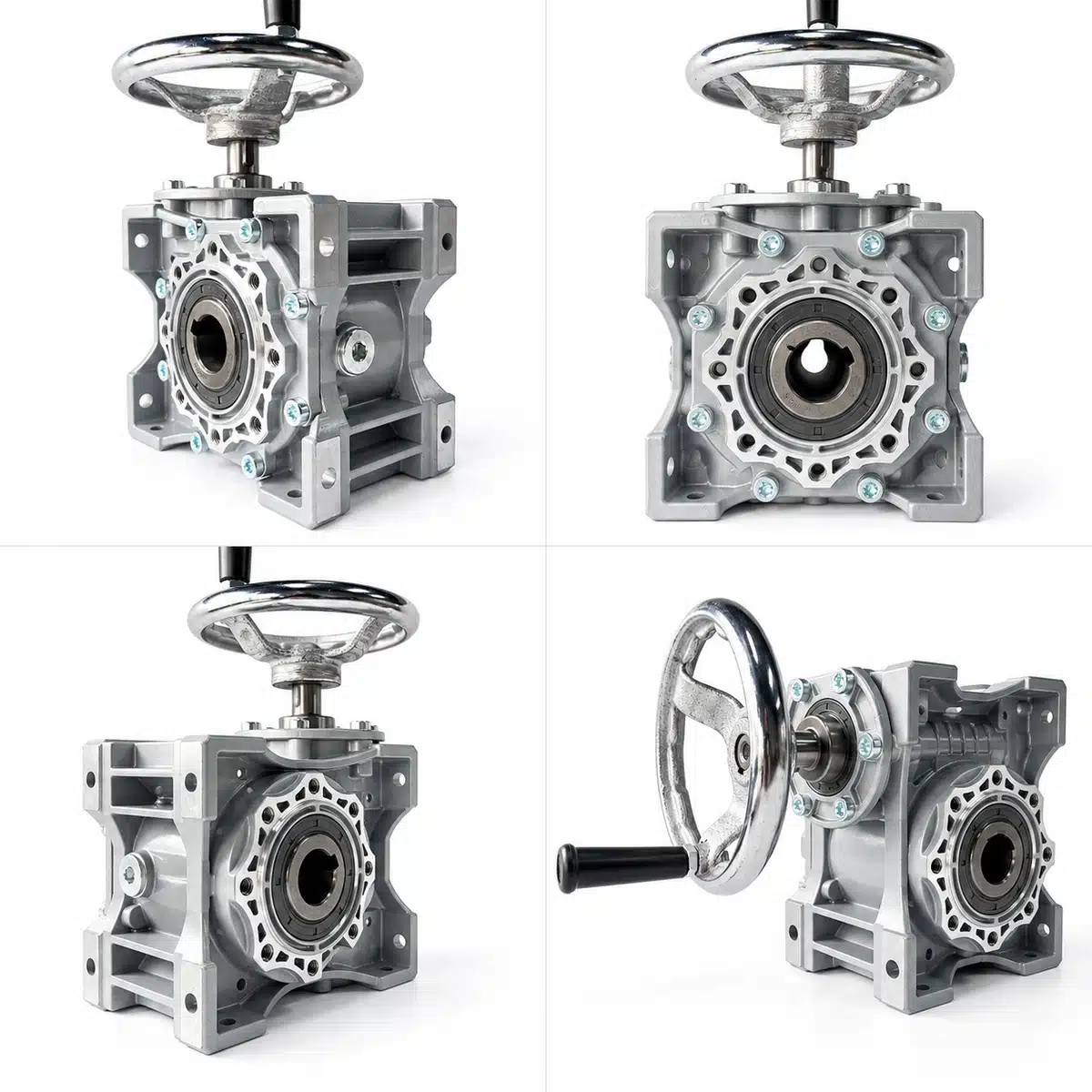
Food Processing Gearbox Requirements: Helical Gear Solutions
Key Takeaways
| Requirement | Why It Matters | Helical Gearbox Solution |
|---|---|---|
| Washdown survival | Daily high-pressure cleaning | IP66/IP69K sealing, Viton seals |
| Food-safe lubricant | Incidental contact risk | NSF H1 synthetic factory-fill |
| Corrosion resistance | Chemical sanitizers attack metals | Stainless shaft, epoxy coating |
| Energy efficiency | 24/7 continuous operation | 94-96% helical vs 60-80% worm |
| Thermal management | Continuous duty, warm environments | Low heat generation, no cooling fan |
| Contamination zero tolerance | Product recall risk from oil leak | Double-lip seals, leak-tested units |
Bottom line: A single oil leak in a food processing line can trigger a product recall costing $50,000-$500,000+. Gearbox specification for food processing is not about finding the cheapest drive — it is about eliminating contamination risk while maintaining the efficiency and reliability that 24/7 production demands.
Table of Contents
- Why Food Processing Gearbox Specification Is Different
- Regulatory and Compliance Requirements
- Washdown Survival: Sealing and Protection
- Food-Grade Lubrication Requirements
- Helical vs. Worm Gear for Food Processing
- Material Specifications for Hygienic Design
- Application Guide by Food Processing Type
- Selection Procedure for Food Processing Gearboxes
- Maintenance in Washdown Environments
- FAQ: Food Processing Helical Gearbox
1. Why Food Processing Gearbox Specification Is Different
A dairy processing plant in Wisconsin installed standard industrial gearboxes on a new yogurt filling line in 2021. Six months later, hairline oil weeping from an output seal on one unit contaminated a batch during overnight production. The batch was detected at QC and destroyed — $28,000 in product loss. Subsequent investigation revealed three additional units showing early seal degradation from daily caustic washdown chemicals.
Total cost: $28,000 product loss + $14,000 seal replacements + $6,000 production downtime + $3,500 third-party audit verification = $51,500 from using standard industrial gearboxes instead of food-grade specified units.
The food-grade gearbox specification that would have prevented the entire incident costs approximately $180-$350 more per unit — covering Viton seals, NSF H1 lubricant, IP66 rating, and stainless output shaft.
Food processing gearbox specification is different because the cost of failure is not mechanical — it is regulatory, reputational, and financial through product contamination.
Three requirements define food processing gearbox specification:
Zero contamination tolerance: Any lubricant leak, paint flake, or corrosion particle entering the product stream is a contamination event. In regulated food production, this triggers batch quarantine, investigation, potential recall, and regulatory attention.
Chemical resistance: Daily washdown uses chlorine-based sanitizers, quaternary ammonium compounds, peracetic acid, caustic soda, or phosphoric acid solutions. Standard industrial seals, paint, and gaskets degrade rapidly under repeated chemical exposure.
Continuous operation in harsh conditions: Food lines typically run 16-24 hours per day in warm, humid environments with daily washdown. This combination of continuous mechanical load, elevated temperature, and chemical assault represents one of the most demanding gearbox operating environments in industrial manufacturing.
2. Regulatory and Compliance Requirements
Lubricant Standards
NSF H1 Registration (Required): NSF H1 lubricants are authorized for incidental food contact — meaning if a seal weeps and lubricant contacts food product, it does not constitute a hazardous contamination event. All food processing gearboxes must be factory-filled with NSF H1 registered lubricant.
NSF H2 (Not sufficient): H2 lubricants are authorized for use where there is no possibility of food contact. Given that any gearbox seal can eventually weep, H1 is the correct standard for food processing applications.
Common NSF H1 lubricants for gearboxes:
- Shell Cassida Fluid GL (PAG synthetic)
- Klüber Klübersynth UH1 (PAO synthetic)
- Fuchs Cassida Fluid GL (PAG synthetic)
- Mobil SHC Cibus (PAO synthetic)
Equipment Design Standards
EHEDG (European Hygienic Engineering & Design Group): Guidelines for hygienic equipment design in food and pharmaceutical processing. Addresses material selection, surface finish, cleanability.
3-A Sanitary Standards: Primarily for dairy processing. Specifies surface finish requirements (Ra ≤ 0.8 µm for product contact surfaces), material grades, and cleanability criteria.
FDA 21 CFR: US regulation covering materials in food contact applications. Lubricants, gaskets, and seals must comply.
EU Regulation 1935/2004: European framework for materials intended for food contact.
Gearbox Certification Checklist
| Requirement | Standard | Verification |
|---|---|---|
| Food-grade lubricant | NSF H1 | Lubricant data sheet |
| Seal material compliance | FDA 21 CFR / EU 1935/2004 | Material certificate |
| IP protection | IP66 minimum, IP69K preferred | IP test certificate |
| Surface finish | Ra ≤ 3.2 µm external (non-contact) | Inspection report |
| Corrosion resistance | Stainless shaft, epoxy coating | Material specification |
| Hygienic design | EHEDG or 3-A where required | Design assessment |
3. Washdown Survival: Sealing and Protection
Washdown Conditions
Daily sanitation protocol (typical food plant):
- Pre-rinse: Warm water, 40-60°C, low pressure
- Chemical application: Caustic foam, 2-5% concentration, 15-20 minute contact
- High-pressure rinse: 40-80 bar, 50-70°C, directed spray
- Sanitizer application: Chlorine or PAA solution
- Final rinse: Cold water, low pressure
This cycle repeats daily — 365 days per year. Standard industrial gearboxes are not designed to survive this chemical and mechanical assault.
IP Rating Requirements
| IP Rating | Protection Level | Application |
|---|---|---|
| IP54 | Dust-protected, splash-resistant | NOT adequate for food processing |
| IP55 | Dust-protected, low-pressure jet | Minimal — dry processing only |
| IP65 | Dust-tight, low-pressure jet | Light washdown, packaged products |
| IP66 | Dust-tight, high-pressure jet | Standard food processing |
| IP69K | Dust-tight, high-temp high-pressure | Dairy, meat, beverage |
Minimum recommendation: IP66 for food processing gearboxes. IP69K for dairy, meat, and beverage applications with daily high-pressure sanitation.
Seal Specification
Standard NBR (nitrile) — Not recommended:
- Degrades with chlorine-based sanitizers
- Hardens with caustic exposure
- Typical life in daily washdown: 6-12 months
- Failure mode: Hardening → cracking → oil leakage
FKM (Viton) — Recommended:
- Excellent resistance to chlorine, caustic, acids
- Maintains elasticity through chemical cycles
- Typical life in daily washdown: 2-4 years
- Temperature range: -20°C to +200°C
PTFE lip seals — Premium option:
- Superior chemical resistance across all sanitizers
- Lower friction coefficient (less heat generation)
- Highest cost but longest service life
- Typical life in daily washdown: 4-6 years
Additional Sealing Measures
Double-lip design (mandatory): Primary lip retains lubricant. Secondary lip excludes water and contaminants. Single-lip seals allow washdown water ingress — not acceptable.
Protected breather: Standard open breathers allow water and chemical mist entry during washdown. Specify sealed breather with membrane or check valve rated IP66 minimum.
Cable/conduit entries: If motor encoder or sensor cables route near gearbox, ensure sealed entries. Open cable routes channel washdown water directly to gearbox.
4. Food-Grade Lubrication Requirements
Why NSF H1 Is Non-Negotiable
In food processing, the question is not “if” a seal will eventually weep — it is “when.” NSF H1 lubricant ensures that when incidental contact occurs, the contamination does not create a food safety hazard.
Regulatory position: Using non-H1 lubricant in food processing zones requires engineering controls demonstrating zero possibility of food contact. In practice, auditors treat this as difficult to prove. NSF H1 eliminates the regulatory risk entirely.
Oil vs. Grease for Food Processing Gearboxes
Oil-filled gearboxes (standard for R Series helical):
- NSF H1 synthetic gear oil (ISO VG 220 or 320)
- Better heat transfer than grease
- Requires effective sealing to contain
- Standard for power levels above 1.5 kW
Grease-filled gearboxes (small units, specialized):
- NSF H1 NLGI Grade 00 or 0 semi-synthetic
- Simpler sealing (lower leak risk)
- Less effective heat transfer
- Suitable for small units up to 1.5 kW
Lubrication Specification for Food Processing R Series
| Parameter | Specification |
|---|---|
| Lubricant type | NSF H1 registered synthetic gear oil |
| Base oil | PAO or PAG |
| Viscosity grade | ISO VG 220 (standard), ISO VG 320 (high load/high temp) |
| Fill | Factory-filled to correct level for specified mounting |
| Change interval | 8,000-12,000 hours (synthetic) |
| Temperature range | -20°C to +120°C (oil sump) |
Specify factory-fill on purchase order. Do not accept standard mineral oil fill with plans to drain and refill in the field — residual mineral oil contaminates NSF H1 lubricant and voids the H1 classification.
5. Helical vs. Worm Gear for Food Processing
Why Food Processors Switch to Helical
The food processing industry has historically used worm gear reducers due to low initial cost and compact size. Three factors are driving conversion to helical:
Energy Cost
Food plants operate conveyors, mixers, and packaging equipment 18-24 hours per day. Efficiency directly impacts operating cost.
Annual energy comparison — 5.5 kW mixer drive, 20 hrs/day, 350 days/year:
| Gearbox | Efficiency | Annual Energy | Annual Cost ($0.12/kWh) |
|---|---|---|---|
| Worm (30:1) | 72% | 29,700 kWh | $3,564 |
| R Series (30:1) | 95% | 22,500 kWh | $2,700 |
| Savings | — | 7,200 kWh | $864/year |
10-year energy savings per drive: $8,640.
Thermal Advantage in Warm Environments
Food processing areas often operate at 25-40°C ambient — bakeries, cooking areas, and packaging near ovens run higher. Worm gearboxes generating 1.5+ kW of heat in these environments frequently require cooling fans or oversizing. R Series helical gearboxes generating 0.3 kW of heat under identical conditions rarely need auxiliary cooling.
Practical impact:
- Worm gear at 35°C ambient: Housing 85-95°C — oil degrades, seals fail faster
- R Series at 35°C ambient: Housing 60-70°C — within normal operating range
- No cooling fan needed: Saves $180-400 installation cost, eliminates fan maintenance, reduces contamination risk from fan-blown debris
Seal Life Extension
Lower operating temperature directly extends seal life:
- Viton seal at 90°C: 12,000-18,000 hours
- Viton seal at 65°C: 25,000-35,000 hours
Cooler gearbox = fewer seal changes = lower contamination risk = less maintenance downtime.
When Worm Gear May Still Be Appropriate
- Very low power (<1 kW) where energy savings are minimal
- Requires self-locking for inclined food conveyors (verify with manufacturer — add brake for safety)
- Extremely tight budget with <8 hrs/day operation
- Applications where compact right-angle worm design fits and helical-bevel K Series does not
6. Material Specifications for Hygienic Design
Housing
R Series aluminum housing (sizes R17-R57):
- Good for food processing: Naturally corrosion-resistant
- Smooth surfaces cleanable
- Specify food-grade epoxy coating (white or light gray for contamination visibility)
- Limitation: Softer than cast iron, susceptible to impact damage from equipment or cleaning
R Series cast iron housing (sizes R67+):
- Must have protective coating for food environments
- Specify epoxy or polyurethane food-safe paint system
- Any coating damage must be repaired immediately (corrosion starts within hours in chemical washdown)
Premium option: Stainless steel housing (custom):
- 304 or 316 stainless steel
- Electropolished for cleanability
- Required for some pharmaceutical and high-care food zones
- Cost: 3-5× standard aluminum housing
- Lead time: 8-12 weeks typically
Output Shaft
Standard carbon steel — Not recommended for food:
- Corrosion begins at seal interface within months of washdown exposure
- Rust particles contaminate product
- Corroded shaft surface damages seal — creates leak path
Stainless steel output shaft — Recommended:
- 304 stainless minimum, 316 preferred for acidic products
- No corrosion at seal interface
- Maintains shaft surface finish (seal life extended)
- Cost premium: +$40-80 per unit
External Hardware
| Component | Standard | Food-Grade Specification |
|---|---|---|
| Mounting bolts | Zinc-plated carbon steel | Stainless steel A2 or A4 |
| Nameplate | Aluminum with adhesive | Stainless steel, laser-engraved |
| Oil drain plug | Carbon steel | Stainless steel or brass |
| Sight glass | Plastic | Borosilicate glass or stainless |
| Breather | Open vent | IP66 sealed membrane type |
Every external surface must resist washdown chemicals. One corroding bolt creates a contamination accumulation point that fails hygiene audit.
Surface Finish Requirements
| Zone | Ra Requirement | Purpose |
|---|---|---|
| Product contact surfaces | ≤ 0.8 µm | Cleanability, no bacterial harborage |
| Near-product surfaces | ≤ 1.6 µm | Easy cleaning |
| Non-product external surfaces | ≤ 3.2 µm | General cleanability |
| Gearbox housing (painted) | Smooth epoxy, no crevices | Prevent contamination traps |
7. Application Guide by Food Processing Type
Dairy Processing
Environment: Daily caustic and acid washdown (CIP), high humidity, 15-30°C ambient
Requirements:
- IP69K rating (high-pressure, high-temperature washdown)
- NSF H1 PAG synthetic lubricant
- Viton or PTFE seals
- Stainless steel output shaft (316 preferred for acid products)
- 3-A Sanitary compliance where required
- White epoxy coating
Typical drives:
- Pasteurizer conveyors: R47-R67, 20:1-40:1
- Filling line drives: R37-R57, 15:1-30:1
- CIP-rated mixer drives: R57-R87, 20:1-50:1
Meat and Poultry Processing
Environment: Aggressive daily washdown with chlorinated chemicals, cold rooms (2-5°C), high humidity, blood and fat exposure
Requirements:
- IP69K mandatory (high-pressure washdown non-negotiable)
- NSF H1 lubricant rated for low-temperature operation
- PTFE or Viton seals (chlorine resistance critical)
- Stainless steel output shaft and hardware (316 required)
- Anti-microbial coating option
- Low-temperature lubricant compatibility (-10°C cold room operation)
Typical drives:
- Conveyor lines: R47-R87, 20:1-50:1
- Grinding and mixing: R67-R107, 15:1-40:1
- Packaging: R37-R57, 15:1-30:1
Bakery and Snack Production
Environment: Flour dust, high ambient temperature (near ovens 40-55°C), moderate washdown
Requirements:
- IP66 minimum (dust exclusion critical)
- High-temperature NSF H1 lubricant (ISO VG 320)
- Viton seals (heat-resistant)
- Dust-sealed breather
- Cooling verification at high ambient (55°C worst case)
Typical drives:
- Dough mixers: R67-R107, 10:1-30:1 (high torque, low speed)
- Oven conveyors: R47-R77, 20:1-50:1 (continuous, hot environment)
- Packaging lines: R37-R57, 15:1-40:1
Beverage Production
Environment: Wet floors, sugar-containing spills, daily chemical washdown, moderate temperatures
Requirements:
- IP66 or IP69K
- NSF H1 lubricant
- Viton seals (sugar solutions and acid cleaners)
- Stainless output shaft
- Corrosion protection on all external surfaces
Typical drives:
- Bottle/can conveyors: R37-R67, 15:1-40:1
- Filling line drives: R47-R67, 20:1-30:1
- Labeling machines: R27-R47, 10:1-25:1
8. Selection Procedure for Food Processing Gearboxes
Simplified 6-Step Process
Step 1: Define load requirements Calculate output torque and speed from process requirements. Same formulas as standard industrial selection.
Step 2: Apply food processing service factor Use base service factor from load table plus:
- Add 0.25 for daily washdown environments (seal and thermal consideration)
- Add 0.25 for ambient temperature >35°C
Step 3: Select frame size Catalog rated torque ≥ design torque. Target 65-80% utilization (additional margin for food environments).
Step 4: Verify thermal rating Particularly important in warm food environments. Verify at actual ambient temperature (not standard 40°C catalog rating). Many food processing areas run 35-55°C — reduce thermal rating 8% per 10°C above 40°C.
Step 5: Specify food-grade options
Minimum food processing specification checklist: ☐ NSF H1 synthetic lubricant (factory-fill) ☐ FKM (Viton) seals — all shaft locations ☐ IP66 minimum (IP69K for dairy, meat, beverage) ☐ Double-lip seal design ☐ Stainless steel output shaft ☐ Stainless steel external hardware ☐ Sealed IP66 breather ☐ Food-grade epoxy coating (white or light color)
Step 6: Confirm documentation Request from supplier: ☐ NSF H1 lubricant certificate ☐ Seal material compliance certificate (FDA/EU) ☐ IP test certificate ☐ Material certificates for stainless components ☐ Assembly test report
9. Maintenance in Washdown Environments
Modified Maintenance Schedule
| Task | Interval | Food Processing Note |
|---|---|---|
| Visual seal inspection | Daily | Before and after each washdown |
| Oil level check | Weekly | Watch for water intrusion (milky oil) |
| Oil color and clarity | Weekly | Milky = water contamination, change immediately |
| Temperature monitoring | Weekly | Baseline comparison |
| Seal replacement | 15,000-20,000 hrs preventive | Don’t wait for visible leakage |
| Breather inspection | Monthly | Washdown blocks membranes |
| Hardware corrosion check | Monthly | Replace any corroding fasteners immediately |
| Oil change (NSF H1 synthetic) | 8,000-10,000 hrs | Reduced from 12,000 due to washdown thermal cycling |
| Complete inspection | Annually | Full disassembly assessment |
Post-Washdown Inspection Protocol
After each washdown cycle, quick visual check: ☐ No water pooling on housing ☐ No visible oil weeping at seals ☐ Breather intact and unblocked ☐ No coating damage or exposed metal ☐ Drain plug secure
This 60-second walk-past inspection catches problems before they become contamination events.
Oil Contamination Detection
Water-in-oil indicators:
- Oil appears milky or cloudy (emulsified water)
- Oil level rises without adding oil (water ingress)
- Unusual color change
- Foaming during operation
Action: Drain immediately, flush with clean NSF H1 oil, refill, inspect seals for washdown water entry path. Do not continue operation with water-contaminated oil — bearing failure follows within 200-500 hours.
10. FAQ: Food Processing Helical Gearbox
Q: What certifications does a food processing gearbox need?
At minimum, a food processing gearbox requires NSF H1 registered lubricant (for incidental food contact compliance), IP66 or higher sealing rating (IP69K for dairy, meat, and beverage), and FDA 21 CFR or EU 1935/2004 compliant seal materials. For dairy applications, 3-A Sanitary Standards compliance may be required. For European food processing, EU machinery directive CE marking applies. Beyond certifications, specify Viton (FKM) or PTFE seals, stainless steel output shaft, food-grade epoxy coating, and sealed breather. Request material certificates and IP test reports from the supplier before installation.
Q: Is a helical gearbox better than a worm gear for food processing?
For continuous food processing operations running 16+ hours per day, helical gearboxes provide significant advantages. Efficiency of 94-96% versus 60-80% for worm gears reduces energy cost by $600-$900 per drive annually (5.5 kW application). Lower operating temperature (60-70°C vs. 85-95°C) extends Viton seal life from 12,000-18,000 hours to 25,000-35,000 hours — directly reducing contamination risk from seal degradation. Cooler operation also extends NSF H1 lubricant life. The R Series helical premium of 35-40% over worm gear typically pays back in energy savings within 12-18 months on continuous food processing lines.
Q: Why do food processing gearboxes leak more than standard industrial units?
They don’t inherently leak more — but the consequences are visible and serious, making every leak noticeable. Standard industrial gearboxes leak at similar rates but the oil drips onto a factory floor rather than into food product. In food processing, three factors accelerate seal failure: daily chemical washdown degrades standard NBR seals within 6-12 months; warm humid environments accelerate elastomer aging; and thermal cycling from hot washdown water followed by cold rinse stresses seal lips. The solution is specifying Viton (FKM) seals rated for chemical exposure from the outset — not retrofitting after the first leak event.
Q: How often should I change oil in a food processing gearbox?
NSF H1 synthetic oil in a properly sealed food processing helical gearbox: 8,000-10,000 hours or annually, whichever comes first. This is shorter than the 10,000-15,000 hours typical for industrial synthetic because food processing environments impose additional stress — washdown thermal cycling, elevated humidity, and potential water micro-ingress through breathers. Monitor oil color and clarity weekly — milky or cloudy oil indicates water contamination and requires immediate change regardless of hours. Establish oil analysis at 4,000-hour intervals for critical drives to detect contamination or degradation before scheduled change interval.
Q: What IP rating do I need for a food processing gearbox?
IP66 is the minimum for food processing applications with regular washdown. This rating protects against high-pressure water jets from any direction. For dairy processing, meat processing, and beverage production where high-pressure, high-temperature sanitation is standard, specify IP69K — which withstands close-range steam cleaning at 80°C and 80-100 bar pressure. IP54 and IP55 are not adequate for food processing — they allow water penetration under washdown conditions that will contaminate lubricant and accelerate seal failure.
Q: Can I retrofit an existing standard gearbox for food processing use?
Technically possible but not recommended for critical food contact zones. Retrofitting requires draining mineral oil completely (residual oil contaminates NSF H1), replacing all seals with Viton, replacing breather with sealed type, replacing corroded hardware with stainless, and applying food-grade coating. Even after retrofit, mineral oil residue in housing cavities can leach into NSF H1 oil for months. The cost of complete retrofit frequently approaches 60-80% of a new food-grade specified unit. For food safety and total cost, purchasing purpose-built food processing specification gearboxes is the better investment.
Q: Do I need stainless steel housing for food processing gearboxes?
Full stainless steel housing is not required for most food processing applications. Standard aluminum housing (R Series small sizes) with food-grade epoxy coating provides adequate corrosion resistance for daily washdown. Cast iron housing (larger sizes) with epoxy coating is also acceptable provided coating integrity is maintained — any chip or scratch must be repaired immediately. Full stainless steel housing is specified only for high-care or ultra-clean zones in pharmaceutical, sterile food processing, or applications where coating maintenance cannot be guaranteed. Stainless housing costs 3-5× standard housing and requires 8-12 week lead time.
Published by KB Transmission Star— KKM Helical Hypoid Gearbox Manufacturer Taiwan Design. China Manufacturing. Global Delivery.
— Industrial Gearbox Manufacturer