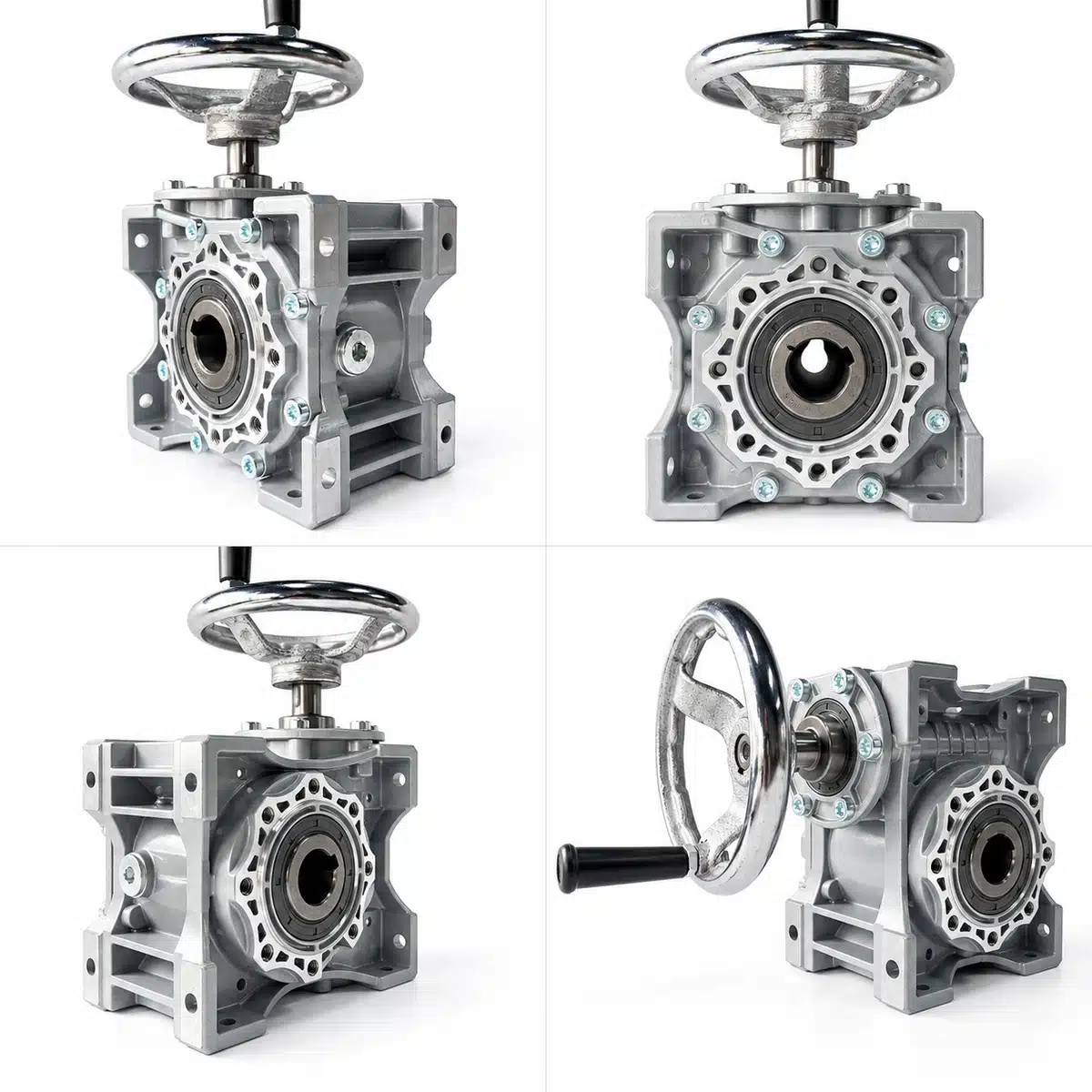
R Series Helical Gearbox Maintenance: Extending Service Life to 50,000 Hours
Key Takeaways
| Maintenance Factor | Impact on Service Life | Cost of Neglect |
|---|---|---|
| Oil condition | Controls 60% of bearing life | Failure at 15,000-25,000 hrs |
| Alignment | Determines bearing load distribution | Failure at 20,000-35,000 hrs |
| Temperature management | Governs oil and seal degradation rate | Seal failure at 8,000-15,000 hrs |
| First oil change (200 hrs) | Removes break-in wear particles | Accelerated wear from day one |
| Vibration monitoring | Detects bearing deterioration early | Unplanned catastrophic failure |
Bottom line: A properly maintained R Series helical gearbox achieves 50,000-80,000 hours of service life. The same unit with neglected maintenance fails at 15,000-25,000 hours. The difference is not the gearbox — it is five maintenance practices that cost less than $200 per year per unit to execute.
Table of Contents
- Why Helical Gearboxes Fail Before Their Time
- The First 200 Hours: Break-In Period
- Lubrication: The Single Most Important Factor
- Temperature Monitoring and Management
- Alignment: The Silent Killer
- Vibration Analysis for Early Fault Detection
- Seal Maintenance and Leak Prevention
- Complete Maintenance Schedule
- Troubleshooting Guide
- FAQ: Helical Gearbox Maintenance
1. Why Helical Gearboxes Fail Before Their Time
A beverage bottling plant replaced an R77 helical gearbox after 14,000 hours — less than 30% of expected service life. The failure investigation was instructive: output-side tapered roller bearing had collapsed, damaging the second-stage gear pair. Root cause was not bearing defect or overload. It was oil.
The gearbox had been commissioned with mineral gear oil and never received its first oil change. At 14,000 hours of continuous operation, the oil was black, oxidized, and contained visible metal particles from the original break-in period. Those particles — which should have been flushed at 200 hours — had been circulating through the bearings for three years, acting as a grinding compound.
Replacement cost: $4,200 (gearbox) + $1,800 (installation labor) + $8,400 (production downtime) = $14,400
Cost of correct maintenance over those 14,000 hours: Oil change at 200 hours ($45) + two subsequent oil changes ($90) + temperature checks ($0 — visual inspection) = $135 total
This ratio — $14,400 failure versus $135 prevention — repeats across industrial facilities worldwide. R Series helical gearboxes are designed for 50,000-80,000 hours. They fail at 15,000-25,000 hours almost exclusively from maintenance neglect, not mechanical inadequacy.
Five Root Causes Account for 90% of Premature Failures
| Root Cause | % of Premature Failures | Prevention |
|---|---|---|
| Oil degradation / contamination | 35% | Timely oil changes, oil analysis |
| Misalignment | 25% | Laser alignment at installation |
| Thermal overload | 15% | Temperature monitoring, ventilation |
| Seal failure / water ingress | 10% | Seal inspection, breather maintenance |
| Overloading (specification error) | 5% | Correct initial selection |
Note: Overloading accounts for only 5% of failures because it is a specification error — not a maintenance issue. The other 90% are entirely preventable through routine maintenance practices detailed in this guide.
2. The First 200 Hours: Break-In Period
The break-in period is the single most impactful maintenance event in a gearbox’s lifecycle. Skipping it causes measurable harm that compounds for the entire service life.
What Happens During Break-In
New gear teeth and bearing surfaces have microscopic peaks (asperities) from manufacturing. During the first 100-200 hours, these peaks wear down and surfaces conform to each other — a process called “running-in.”
This process generates:
- Fine metal particles (10-50 micron)
- Increased friction (temporary)
- Slightly elevated temperature (normal)
- Accelerated oil degradation (from particles and heat)
First Oil Change at 200 Hours
This oil change is mandatory — not optional.
Procedure:
- Run gearbox for 30 minutes to warm oil and suspend particles
- Shut down and drain immediately (hot oil flows completely)
- Inspect drained oil for:
- Color: Should be darker than fill, but not black
- Particles: Small amount of fine metallic particles is normal
- Water: Any milky appearance indicates seal or breather issue
- Flush with small amount of fresh oil if heavy particles visible
- Refill with correct grade and quantity for mounting position
- Record date, hours, and oil condition
What the drained oil tells you:
| Oil Condition | Assessment | Action |
|---|---|---|
| Slightly darkened, minimal particles | Normal break-in | Refill, proceed to normal schedule |
| Dark with visible fine particles | Heavy break-in, but acceptable | Flush, refill, recheck at 500 hours |
| Black, heavy particles, metallic sheen | Abnormal wear | Investigate — possible overload or misalignment |
| Milky or cloudy | Water contamination | Check seals and breather before refilling |
Post-Break-In Monitoring (200-500 Hours)
After first oil change, monitor for one additional interval:
- Temperature: Should stabilize 5-10°C lower than first 200 hours (surfaces now conform)
- Noise: Should be slightly quieter (smoother mesh)
- Oil level: Should remain stable (no leaks developing)
If temperature, noise, and oil level stabilize normally, transition to standard maintenance schedule.
3. Lubrication: The Single Most Important Factor
Oil condition controls bearing life. Bearing life determines gearbox life. Therefore, oil condition controls gearbox life. This is not an oversimplification — it is validated by decades of bearing failure analysis data showing that 60-70% of premature bearing failures trace to lubrication inadequacy.
Oil Selection
R Series standard specification:
| Parameter | Standard | Heavy Duty | Food Grade |
|---|---|---|---|
| Type | Industrial gear oil | Industrial gear oil | NSF H1 synthetic |
| Base oil | Mineral or synthetic | Synthetic recommended | PAO or PAG |
| Viscosity grade | ISO VG 220 | ISO VG 320 | ISO VG 220 |
| Additive package | EP (extreme pressure) | EP | Food-safe EP |
When to upgrade to synthetic:
| Condition | Mineral Oil | Synthetic Oil |
|---|---|---|
| Operating hours/day | <12 hrs | >12 hrs |
| Ambient temperature | 15-35°C | >35°C or <5°C |
| Change interval desired | 4,000-6,000 hrs | 10,000-15,000 hrs |
| Operating temperature | <75°C housing | >75°C housing |
| Environment | Clean, dry | Dusty, humid, washdown |
Synthetic oil cost: 2-3× mineral oil price. But: Change intervals 2-3× longer, temperature 8-15°C lower, efficiency +0.5-2.0%. In continuous duty, synthetic is almost always more economical on total cost basis.
Oil Change Intervals
| Oil Type | Change Interval | Equivalent Calendar Time |
|---|---|---|
| Mineral oil | 4,000-6,000 hours | 6-12 months |
| PAO synthetic | 8,000-12,000 hours | 12-24 months |
| PAG synthetic | 10,000-15,000 hours | 18-30 months |
⚠️ Reduce intervals by 30-50% if:
- Operating temperature consistently above 80°C
- Dusty or contaminated environment
- Frequent washdown (food processing)
- Heavy continuous duty >20 hours/day
- Oil analysis shows early degradation
Oil Level Monitoring
Weekly check at sight glass:
- Oil at center of sight glass: Correct
- Oil below sight glass: Add immediately — bearing starvation imminent
- Oil above sight glass: Overfilled — can cause seal pressure and leakage
Oil level rising without adding oil: Indicates water ingress through seals or breather — investigate immediately.
Oil Analysis Program
For critical drives and continuous-duty applications, oil analysis at 2,000-4,000 hour intervals provides early warning before damage occurs.
What oil analysis detects:
| Parameter | Normal | Warning | Critical |
|---|---|---|---|
| Viscosity (% change) | ±5% | ±10% | ±20% |
| Water content (ppm) | <200 | 200-500 | >500 |
| Iron particles (ppm) | <50 | 50-100 | >100 |
| Acid number (mgKOH/g) | <1.0 | 1.0-2.0 | >2.0 |
| Copper (ppm) | <20 | 20-50 | >50 |
Cost of oil analysis: $25-$50 per sample. Cost of undetected oil degradation: $5,000-$15,000 in bearing and gear damage. The economics of oil analysis are unambiguous.
4. Temperature Monitoring and Management
Temperature is the most accessible and informative condition indicator for gearbox health. Every failure mode produces a temperature signature before mechanical damage becomes irreversible.
Establishing Temperature Baseline
At commissioning (after break-in):
- Mark a measurement point on the housing (permanent marker or paint dot)
- Run at normal load for 4 hours continuous
- Measure housing surface temperature with IR thermometer or thermal camera
- Record: ambient temperature, housing temperature, load condition
- This is your baseline
Normal operating temperatures:
| Ambient | Expected Housing Temperature | Normal Rise |
|---|---|---|
| 20°C | 52-68°C | 32-48°C |
| 30°C | 60-76°C | 30-46°C |
| 40°C | 68-82°C | 28-42°C |
Temperature Action Thresholds
| Reading | Assessment | Action |
|---|---|---|
| Baseline ±5°C | Normal operation | Continue monitoring |
| Baseline +8°C | Early warning | Check oil level, ventilation, load |
| Baseline +12°C | Developing problem | Investigate within 1 week |
| Baseline +15°C | Significant concern | Investigate within 48 hours |
| Baseline +20°C | Imminent risk | Stop and inspect before restarting |
| >85°C absolute | Oil degradation threshold | Reduce load or stop for investigation |
| >95°C absolute | Seal and bearing damage zone | Stop immediately |
Temperature Trending
Single temperature readings have limited value. Temperature trending over time reveals developing problems before they cause failure.
Example trend pattern — bearing degradation:
- Month 1-12: Stable at 62°C (baseline)
- Month 13: 64°C (+2°C — within normal variation)
- Month 14: 67°C (+5°C — note, continue monitoring)
- Month 15: 71°C (+9°C — investigate)
- Month 16: 78°C (+16°C — bearing replacement needed)
- Month 17: Bearing failure if not addressed
Without trending: Failure appears sudden at month 17. With trending: Problem detected at month 14, bearing replaced at month 15 during planned shutdown. Gearbox internals undamaged. Cost: $400 bearing replacement. Without trending: $4,000-$8,000 complete gearbox replacement.
Cooling Measures
If operating temperature is marginal or gradually increasing:
| Solution | Temperature Reduction | When to Apply |
|---|---|---|
| Clean cooling fins | 5-10°C | First action, zero cost |
| Improve ventilation | 5-15°C | Ensure 100-150mm clearance |
| Switch to synthetic oil | 8-15°C | If running mineral oil |
| Add cooling fan | 15-25°C | Continuous duty >16 hrs/day |
| Reduce duty cycle | Variable | If process permits |
| External oil cooler | 25-40°C | Large units, harsh conditions |
Start with zero-cost measures (cleaning fins, improving airflow) before investing in cooling hardware.
5. Alignment: The Silent Killer
Misalignment creates cyclic loading on bearings that exceeds their design capacity — not in magnitude, but in direction and frequency. A bearing designed for radial load cannot tolerate continuous angular loading without accelerated fatigue.
Alignment Requirements
| Parameter | Target | Acceptable | Unacceptable |
|---|---|---|---|
| Parallel offset | <0.05mm | 0.05-0.10mm | >0.10mm |
| Angular misalignment | <0.08° | 0.08-0.15° | >0.15° |
When Alignment Matters Most
At installation: Always align with precision tools. “Close enough by eye” is not a specification.
After any maintenance involving motor removal: Re-align before restarting. Removing and reinstalling a motor without re-alignment introduces misalignment that was not present before the maintenance event.
After foundation or base changes: Settling, thermal expansion, and structural modification all affect alignment.
Annual verification: Even properly installed drives can develop misalignment over time from foundation settling, thermal cycling, and vibration-induced fastener relaxation.
Alignment Methods
| Method | Accuracy | Time | Cost | Recommendation |
|---|---|---|---|---|
| Straightedge / feeler gauge | ±0.10mm | 30 min | $0 | Emergency only |
| Dial indicator | ±0.03mm | 45-60 min | $200-500 tools | Adequate for most |
| Laser alignment | ±0.01mm | 20-30 min | $2,000-8,000 tools | Preferred for continuous duty |
Laser alignment recommendation: For facilities with 10+ gearboxes, laser alignment tools pay for themselves within 12-18 months through reduced bearing failures. Service companies offer laser alignment at $150-$300 per drive — economical for smaller facilities.
Alignment Impact on Bearing Life
| Misalignment Level | Bearing Life Impact |
|---|---|
| Within specification (<0.05mm) | 100% design life |
| Marginal (0.05-0.10mm) | 70-85% design life |
| Poor (0.10-0.20mm) | 40-60% design life |
| Severe (>0.20mm) | 15-30% design life |
At 0.15mm misalignment — commonly seen in “close enough” installations — bearing life drops to approximately 50% of design capacity. A gearbox designed for 60,000 hours fails at 30,000 hours. The gearbox is not defective — the installation is.
6. Vibration Analysis for Early Fault Detection
Vibration monitoring detects bearing deterioration, gear damage, and misalignment 2-6 months before temperature or noise changes become detectable by human senses.
Baseline Vibration Measurement
At commissioning (after break-in), measure vibration at:
- Input shaft bearing housing (horizontal, vertical, axial)
- Output shaft bearing housing (horizontal, vertical, axial)
- Record overall velocity (mm/s RMS) and acceleration (g RMS)
Vibration Severity Standards (ISO 10816)
| Velocity (mm/s RMS) | Assessment | Action |
|---|---|---|
| 0-2.8 | Good | Normal operation |
| 2.8-4.5 | Satisfactory | Monitor trend |
| 4.5-7.1 | Unsatisfactory | Investigate within 30 days |
| 7.1-11.2 | Unacceptable | Plan shutdown within 1 week |
| >11.2 | Dangerous | Stop immediately |
Vibration Monitoring Frequency
| Application Criticality | Monitoring Interval |
|---|---|
| Non-critical, spare available | Quarterly |
| Standard production | Monthly |
| Critical, no backup | Bi-weekly |
| Continuous 24/7, high-value | Weekly or online continuous |
What Vibration Tells You
| Vibration Pattern | Probable Cause | Timeline to Failure |
|---|---|---|
| Overall level increasing gradually | Bearing wear | 3-12 months |
| Spike at 1× shaft speed | Misalignment or imbalance | Months if mild, weeks if severe |
| Spike at bearing defect frequencies | Bearing damage initiated | 2-6 months |
| Spike at gear mesh frequency | Gear tooth damage | 1-6 months |
| Broadband increase | Advanced deterioration | Days to weeks |
Cost-Benefit of Vibration Monitoring
Portable vibration analyzer: $3,000-$8,000 (handheld, route-based) Online continuous monitoring: $500-$1,500 per point (installed sensor + transmitter)
Cost of one unplanned gearbox failure:
- Gearbox replacement: $2,000-$6,000
- Installation labor: $1,000-$2,000
- Production downtime: $5,000-$50,000
- Total: $8,000-$58,000
One prevented failure pays for the monitoring program for 2-10 years.
7. Seal Maintenance and Leak Prevention
Oil leaks are the most visible maintenance failure — and the most preventable.
Seal Life Expectations
| Seal Material | Normal Conditions | Harsh Conditions |
|---|---|---|
| NBR (nitrile) | 15,000-25,000 hrs | 8,000-15,000 hrs |
| FKM (Viton) | 25,000-40,000 hrs | 15,000-25,000 hrs |
| PTFE | 35,000-50,000 hrs | 20,000-35,000 hrs |
Harsh conditions: High temperature (>80°C housing), chemical exposure, frequent washdown, dusty environment, frequent thermal cycling.
Proactive Seal Replacement
Do not wait for visible leakage to replace seals. By the time oil is visible externally:
- Seal has been compromised for weeks or months
- Contaminants have been entering for the same period
- Bearing lubrication has been progressively degrading
- Environmental contamination has already occurred (food processing risk)
Replacement schedule:
- NBR seals: Replace at 20,000 hours or first sign of weeping
- Viton seals: Replace at 30,000 hours or first sign of weeping
- Combine with planned oil change for efficiency
Breather Maintenance
Breathers equalize internal and external pressure during temperature cycling. Blocked breathers cause:
- Internal pressure buildup during operation (pushes oil past seals)
- Vacuum during cooldown (pulls contaminants in through seals)
- Accelerated seal failure
Maintenance:
- Inspect monthly (visual check for blockage)
- Clean or replace quarterly in dusty environments
- Replace annually regardless of appearance
- Upgrade to sealed membrane type in washdown environments
Shaft Surface Condition
Seals ride on shaft surface. Shaft damage creates leak paths that new seals cannot overcome.
Inspect shaft at every seal replacement:
- Surface finish: Should be Ra 0.4-0.8 µm (mirror-like, no visible marks)
- Wear groove: If groove visible under seal contact area, repair shaft or use shaft repair sleeve
- Corrosion: Stainless shafts prevent this — standard carbon steel corrodes in humid/washdown environments
- Scoring: Any circumferential scratch creates permanent leak path
8. Complete Maintenance Schedule
Daily (During Operation)
| Task | Method | Time | Purpose |
|---|---|---|---|
| Listen for unusual noise | Walk-by | 30 sec | Detect gear or bearing anomaly |
| Visual leak check | Walk-by | 30 sec | Early leak detection |
| Temperature feel check | Hand near housing | 15 sec | Gross overheating detection |
Total daily: 75 seconds per gearbox.
Weekly
| Task | Method | Time |
|---|---|---|
| Oil level at sight glass | Visual | 1 min |
| Temperature reading (IR gun) | IR thermometer | 2 min |
| Record temperature in log | Written/digital | 1 min |
| Oil color and clarity (sight glass) | Visual | 1 min |
Total weekly: 5 minutes per gearbox.
Monthly
| Task | Method | Time |
|---|---|---|
| Mounting bolt torque check | Hand-wrench feel check | 5 min |
| Seal condition inspection | Visual close inspection | 5 min |
| Breather condition check | Visual, blow-through test | 3 min |
| Clean cooling fins if dusty | Brush or compressed air | 5 min |
Total monthly: 18 minutes per gearbox.
Quarterly
| Task | Method | Time |
|---|---|---|
| Vibration measurement | Portable analyzer | 15 min |
| Coupling inspection | Visual, check for wear | 10 min |
| Oil sample for analysis | Draw sample from drain | 10 min |
| Complete temperature profile | IR camera or multi-point IR | 10 min |
Total quarterly: 45 minutes per gearbox.
Annually
| Task | Method | Time |
|---|---|---|
| Oil change (mineral oil) | Drain, flush if needed, refill | 45 min |
| Alignment verification | Laser or dial indicator | 30 min |
| Mounting hardware re-torque | Torque wrench, full pattern | 15 min |
| Complete seal inspection | Close inspection all shaft exits | 15 min |
| Nameplate and documentation review | Verify records current | 10 min |
Total annually: 2 hours per gearbox.
Extended Intervals
| Task | Interval | Method | Time |
|---|---|---|---|
| Oil change (synthetic) | 10,000-15,000 hrs | Drain, refill | 45 min |
| Proactive seal replacement | 20,000-30,000 hrs | Disassembly required | 2-3 hrs |
| Bearing condition assessment | 20,000 hrs | Vibration + oil analysis combined | 1 hr |
| Full internal inspection | 40,000-50,000 hrs | Disassemble, inspect all components | 4-6 hrs |
Total Annual Maintenance Cost Per Gearbox
| Item | Cost |
|---|---|
| Oil (mineral, annual change) | $30-60 |
| Oil analysis (quarterly) | $100-200 |
| Seal replacement (prorated annual) | $20-40 |
| Breather replacement | $10-15 |
| Labor (all tasks, estimated) | $150-300 |
| Total annual | $310-615 |
Versus unplanned failure cost: $8,000-$58,000 per event. The maintenance investment provides 15-100× return on every dollar spent.
9. Troubleshooting Guide
Quick Diagnosis Table
| Symptom | Probable Cause | Immediate Action | Root Cause Investigation |
|---|---|---|---|
| Temperature rising gradually | Oil degradation, ventilation blocked | Check oil, clean fins | Oil analysis, verify clearances |
| Temperature spike (sudden) | Bearing failure initiating | Stop, investigate before restart | Vibration analysis, inspect bearings |
| New noise (whine/hum) | Misalignment, gear wear, low oil | Check oil level and alignment | Vibration analysis at mesh frequency |
| New noise (grinding/clicking) | Bearing damage, foreign object | Stop immediately | Disassemble and inspect |
| Oil leak at output seal | Seal wear, shaft damage | Clean and monitor rate | Schedule seal replacement |
| Oil leak at input seal | Seal wear, pressure buildup | Check breather first | Replace seal and breather |
| Oil level dropping | Leak, evaporation (high temp) | Find and fix leak source | Seal inspection, all shaft exits |
| Oil color changed to milky | Water contamination | Change oil immediately | Find water entry (seal, breather) |
| Vibration increased | Bearing wear, misalignment, imbalance | Vibration analysis | Frequency analysis determines source |
| Motor running hot | Gearbox overloaded, misaligned | Check load, check alignment | Verify service factor, measure torque |
Emergency Response Protocol
If unusual noise or sudden temperature increase detected:
- Do not ignore it. Helical gearboxes do not spontaneously develop noise. Any new sound indicates a developing condition.
- Reduce load if possible. Running at reduced load while investigating may prevent catastrophic failure.
- Record the symptom. Audio recording, temperature reading, vibration reading. This data guides investigation.
- Schedule investigation within 48 hours. Most developing faults allow days to weeks of continued operation at reduced load — but not indefinitely.
- Do not add oil to a leaking gearbox and consider it fixed. The leak is the symptom. The seal condition is the problem. Adding oil delays the investigation while damage continues.
10. FAQ: Helical Gearbox Maintenance
Q: What is the expected service life of an R Series helical gearbox?
With proper maintenance, R Series helical gearboxes achieve 50,000-80,000 operating hours. With synthetic lubrication, disciplined oil change intervals, laser alignment, and vibration monitoring, 80,000-100,000+ hours is achievable. Service life is primarily determined by maintenance quality rather than inherent mechanical limitations. The same gearbox model can fail at 15,000 hours with neglected maintenance or run to 80,000 hours with disciplined care. The five critical maintenance factors are: timely oil changes (especially the first at 200 hours), temperature monitoring, alignment verification, seal condition, and vibration trending.
Q: How often should I change the oil in a helical gearbox?
Mineral oil: 4,000-6,000 hours or 12 months, whichever comes first. PAO synthetic: 8,000-12,000 hours or 24 months. PAG synthetic: 10,000-15,000 hours or 30 months. Reduce these intervals by 30-50% for operating temperatures consistently above 80°C, dusty or contaminated environments, heavy continuous duty above 20 hours per day, or food processing washdown environments. The first oil change at 200 hours after commissioning is mandatory regardless of oil type — it removes break-in wear particles that otherwise circulate and damage bearing surfaces for the entire remaining service life.
Q: What oil should I use in an R Series helical gearbox?
Standard applications: ISO VG 220 industrial gear oil with EP (extreme pressure) additives. High-load or high-temperature applications: ISO VG 320. Food processing: NSF H1 registered synthetic (PAO or PAG base). For continuous operation above 12 hours per day, synthetic oil (PAO or PAG) is recommended regardless of industry — the longer change intervals, lower operating temperature, and better film strength justify the 2-3× higher oil cost through reduced maintenance frequency and extended component life. Never mix mineral and synthetic oils without complete drain and flush. Never mix PAO and PAG synthetics.
Q: How do I know if my gearbox needs maintenance before it fails?
Monitor three indicators: temperature, vibration, and oil condition. Temperature trending is the most accessible — measure weekly at the same housing location and record. Any sustained increase above 8-10°C from established baseline warrants investigation. Vibration analysis quarterly detects bearing deterioration 2-6 months before audible noise develops. Oil analysis at 2,000-4,000 hour intervals reveals contamination, viscosity breakdown, and wear particle generation before they cause damage. These three monitoring methods together provide 3-12 months advance warning of most failure modes — sufficient time to plan maintenance during scheduled downtime rather than emergency repair.
Q: Why is the first oil change at 200 hours so important?
During the first 100-200 operating hours, new gear teeth and bearing surfaces undergo a break-in process where microscopic peaks wear down and surfaces conform. This generates fine metal particles that suspend in the oil. If not drained at 200 hours, these particles circulate continuously through bearings and gear mesh, acting as an abrasive compound that accelerates wear throughout the gearbox’s entire service life. The first oil change removes these particles and replaces degraded oil with fresh lubricant. Skipping this single maintenance event measurably reduces bearing life — from 50,000+ hours to 30,000-40,000 hours in our failure analysis data. It is the highest-return maintenance action in the gearbox lifecycle.
Q: What causes oil leaks in helical gearboxes and how do I prevent them?
Three primary causes: seal degradation from age, heat, or chemical exposure (most common); blocked breather creating internal pressure that pushes oil past seals; and shaft surface damage providing leak paths that new seals cannot overcome. Prevention requires: specifying correct seal material for the environment (Viton for temperatures above 80°C or chemical exposure, NBR adequate for standard conditions), monthly breather inspection and annual replacement, proactive seal replacement at 20,000-30,000 hours before visible leakage develops, and shaft inspection at every seal change to detect wear grooves or corrosion. For washdown environments, specify stainless steel output shaft — standard carbon steel corrodes at the seal interface, creating permanent leak paths.
Q: Do I need vibration monitoring on every gearbox?
Not necessarily — prioritize based on criticality and consequence of failure. Critical drives (no backup, high downtime cost, 24/7 operation): monthly vibration monitoring, consider online continuous monitoring. Standard production drives (backup available, moderate downtime impact): quarterly vibration monitoring. Non-critical drives (easily replaced, low production impact): semi-annual or annual vibration check. A portable vibration analyzer costing $3,000-$8,000 serves an entire facility. One prevented unplanned failure ($8,000-$58,000 including downtime) pays for the instrument for years. For facilities with 10+ gearboxes, the investment case is immediate.
Q: Can I extend oil change intervals beyond manufacturer recommendations?
Only with oil analysis data supporting the extension. If oil analysis at the scheduled change interval shows all parameters within normal limits (viscosity within ±5%, water below 200 ppm, metals below warning thresholds, acid number below 1.0), you can conservatively extend by 25-50% and retest. Without oil analysis, extending intervals is gambling — the oil may be degraded beyond its protective capability without visible indicators. Synthetic oils generally support longer intervals than mineral oils, but actual degradation rate depends on operating temperature, load, contamination exposure, and environmental conditions. Oil analysis removes the guesswork and provides documented justification for extended intervals.
Q: How much does proper gearbox maintenance cost per year?
Total annual maintenance cost for a typical R Series helical gearbox: $310-$615 per unit per year. This includes oil ($30-60), oil analysis quarterly ($100-200), prorated seal replacement ($20-40), breather replacement ($10-15), and labor for all inspection and maintenance tasks ($150-300). This investment delivers 50,000-80,000 hour service life. Without maintenance, the same unit fails at 15,000-25,000 hours — requiring $8,000-$58,000 replacement cost including downtime. Annual maintenance investment provides 15-100× return on every dollar spent, making it one of the highest-ROI activities in facility management.
Published by KB Transmission Star— KKM Helical Hypoid Gearbox Manufacturer Taiwan Design. China Manufacturing. Global Delivery.
— R Series Helical Gearbox Manufacturer