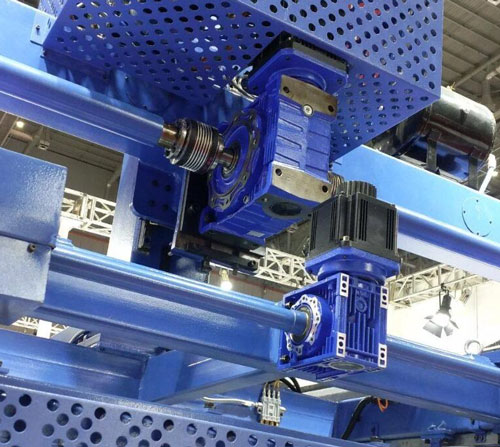
Industrial Gearbox Manufacturing Process: A Behind-the-Scenes Look at Quality Transmission
For B2B procurement managers and industrial engineers, a gearbox is more than just a mechanical component—it is the heart of your machinery. A single failure can trigger a cascade of production downtime, costing thousands of dollars per hour. But what truly separates a “cheap” gearbox from one that delivers years of reliability?
The answer lies in the industrial gearbox manufacturing process.
As an experienced gearbox manufacturer, we invite you behind the scenes of our production floor. In this guide, we break down the critical stages of gearbox creation—from raw material selection to precision testing—to help you understand exactly what to look for when evaluating your next industrial drive supplier.
Raw Material Selection: The Foundation of Durability
Every great gearbox starts at the metallurgical level. In industrial applications, the material must withstand massive stress, cyclic loading, and potential shock.
At our facility, we prioritize high-quality alloy steel (typically 20CrMnTi or 40Cr) for our gears. Why? Because these materials provide the perfect balance of core toughness and surface hardenability.
- Quality Audits: Before a single bar of steel enters our CNC machines, it undergoes spectral analysis to verify its chemical composition.
- Homogeneity: We insist on forging over casting for gear blanks. Forging improves the grain structure of the metal, significantly enhancing the fatigue life of the final gear compared to raw casting.
Gear Cutting Process: Shaping the Future
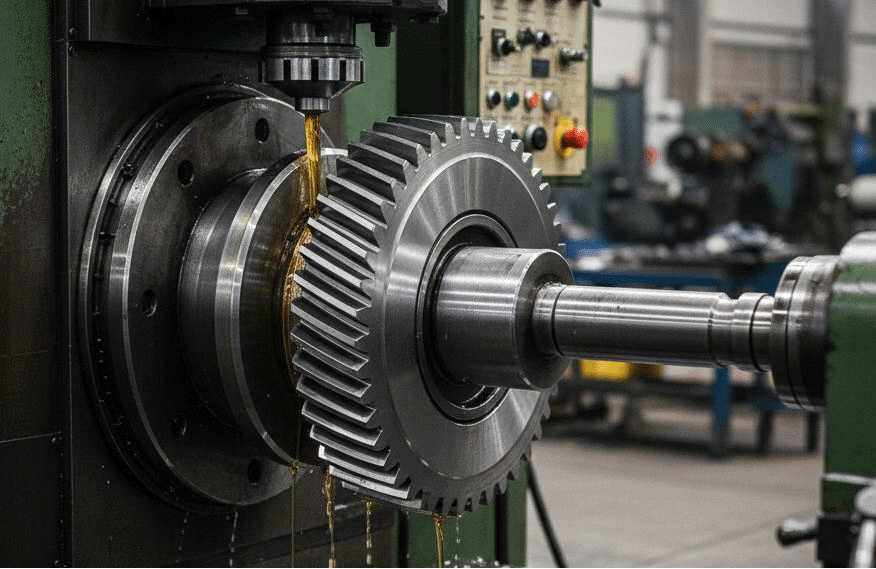
Once the steel blanks are prepared, the transformation begins. The gear cutting process is where the design on paper becomes physical reality.
We utilize advanced CNC Hobbing Machines to cut the teeth profile. Accuracy at this stage is non-negotiable.
- Why Hobbing? It allows for the precise generation of involute tooth profiles, which are essential for smooth, quiet, and efficient power transmission.
- Micro-Level Precision: Our machines operate at tolerances measured in microns. Even a slight deviation here can lead to noise and premature wear in the finished gearbox. This is why our floor operators perform intermediate checks for every batch.
Heat Treatment: Strengthening the Gear
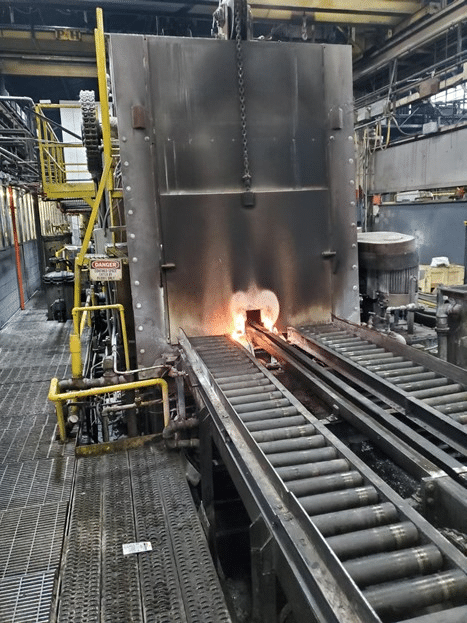
A gear is only as good as its surface hardness. Raw steel is too soft to withstand the constant pressure of meshing teeth. This is where heat treatment (specifically carburizing and quenching) becomes the “secret sauce” of a long-lasting gearbox.
- Carburizing: We heat the gears in a carbon-rich atmosphere, allowing carbon to diffuse into the surface layer of the steel.
- Quenching: Rapid cooling locks in this carbon, creating a hard, wear-resistant outer shell (the “case”), while leaving the inner core of the gear ductile and tough.
This “hard-case, tough-core” structure is the hallmark of professional industrial gearbox production. It ensures that the gear teeth don’t break under shock loads, even as they endure years of friction.
Precision Grinding: The Quest for Silence
Heat treatment can sometimes cause minor distortions in the metal. If left uncorrected, these distortions result in “gear chatter,” vibration, and inefficiency. To solve this, we move to Precision Gear Grinding.
Using state-of-the-art CNC Gear Grinding Machines, we finish the tooth surfaces to reach an AGMA quality level of 10 or higher.
- Surface Finish: Grinding reduces the surface roughness ($R_a$) to a level that minimizes friction.
- Profile Correction: We can intentionally modify the tooth profile (such as “crowning”) to ensure optimal load distribution across the gear face, even under slight shaft misalignment.
This is the difference between a gearbox that screams under load and one that hums in near-silence.
Assembly and Testing: The Final Seal of Approval
The final stage of the gearbox manufacturing process is the assembly and testing phase. Precision parts mean nothing if they aren’t assembled with expert care.
- Clean Room Assembly: Our assembly area is strictly controlled to prevent contaminants. Even a tiny metal shaving or particle of dust can destroy a bearing seal.
- Bearing Selection: We only use premium, verified-source bearings (like SKF, NSK, or high-end local alternatives) to ensure longevity.
- Running-In and Testing: Before a unit leaves our facility, it undergoes a Load Test. We monitor noise levels, heat buildup, and vibration patterns. If a unit doesn’t meet our strict decibel limits, it doesn’t leave the shop.
Conclusion: Why Manufacturing Process Matters
When you source an industrial gearbox, you aren’t just buying metal—you are buying the process behind it. A supplier that skips gear grinding to save costs or cuts corners on heat treatment will eventually cost you much more in downtime and maintenance.
As a B2B manufacturer, we take pride in our transparency. By controlling every step—from raw steel to the final sound-dampening test—we ensure our gearboxes drive your production lines forward, day after day.
Are you looking for a manufacturing partner that prioritizes quality?
Request a Factory Virtual Tour or Contact our Engineering Team to discuss your custom gearbox requirements.