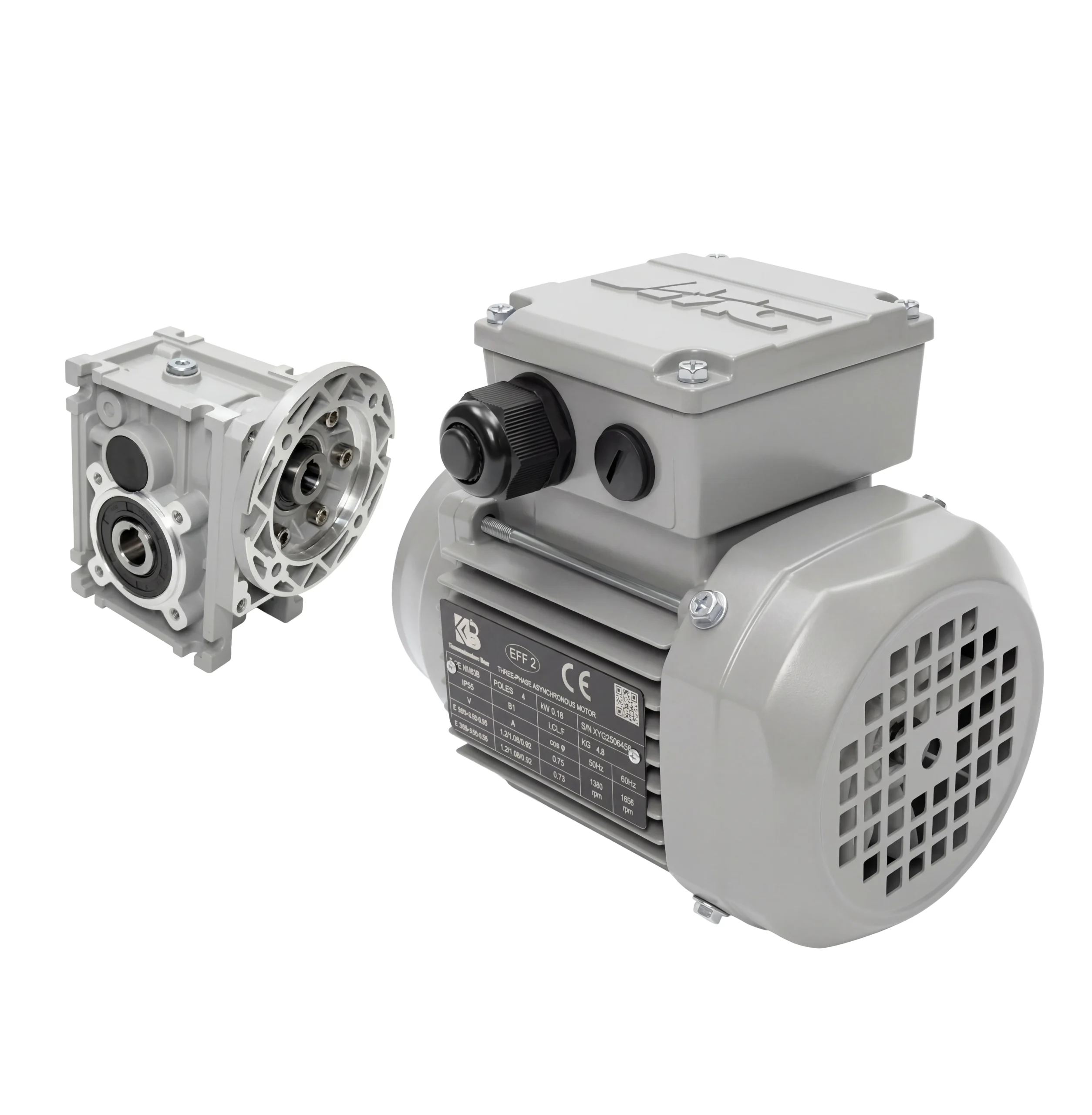
Description
KKM Helical Hypoid Gearbox — High-Efficiency NMRV Replacement
High-Efficiency Helical Hypoid Gear Reducers for Industrial Automation, Conveyors, Packaging Machinery and OEM Equipment
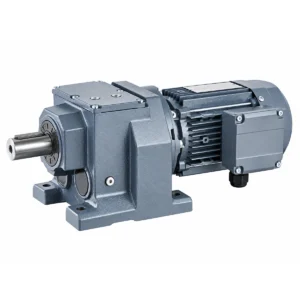
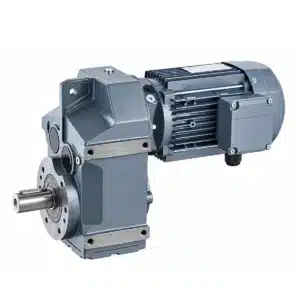
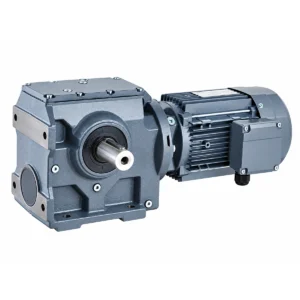
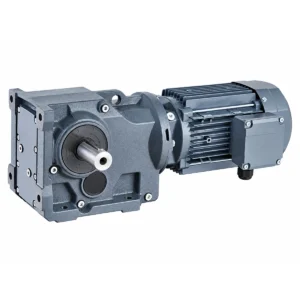
KKM Series Helical Hypoid Gearboxes are engineered for industrial applications that require higher transmission efficiency, lower operating temperature, reduced maintenance, reliable continuous operation and flexible motor configurations.
Compared with conventional worm gear reducers, the helical-hypoid transmission uses a greater proportion of rolling contact and lower-friction gear engagement to reduce power losses and heat generation.
The complete KKM platform is available in three drive configurations:
KKM S1 – IEC Motor Input Series
For standard IEC electric motors and general industrial machinery.
KKM S2 – Spline Input Series
For compact motor integration using an internal spline connection.
KKM S3 – Permanent Magnet Motor Series
For integrated high-efficiency drive systems using permanent magnet motors.
Available gearbox sizes include:
KKM040 · KKM050 · KKM063 · KKM075 · KKM090 · KKM110
The KKM Series is particularly suitable for OEM machinery manufacturers, conveyor systems, packaging equipment, food machinery, automated production lines, logistics systems, and applications where an existing NMRV worm gear reducer needs to be upgraded to a more efficient transmission solution.
Need help selecting a KKM gearbox?
Send us your existing gearbox model, ratio, motor power, mounting position and required output torque, and our engineering team can recommend a suitable KKM configuration.
REQUEST TECHNICAL SELECTION & QUOTATION
KKM Helical Hypoid Gearbox at a Glance
| Specification | KKM Series |
|---|---|
| Gearbox Type | Helical-Hypoid Gear Unit |
| Series | S1 / S2 / S3 |
| Available Sizes | KKM040 / 050 / 063 / 075 / 090 / 110 |
| B-Stage Transmission | 2-stage |
| B-Stage Ratio Range | 7.5:1–60:1 |
| C-Stage Transmission | 3-stage |
| C-Stage Ratio Range | 75:1–300:1 |
| S1 Motor Interface | IEC Motor |
| S2 Motor Interface | Spline Input |
| S3 Motor Type | Permanent Magnet Synchronous Motor |
| Housing | Aluminum Alloy 040–090 / Cast Iron 110 |
| Output Configurations | Hollow Shaft / Output Shaft / Flange |
| Accessories | Output Flange / Torque Arm / Output Shaft |
| Typical Applications | Conveyors, Packaging, Automation, Food Processing, Industrial Machinery |
Why Choose a Helical Hypoid Gearbox Instead of a Worm Gearbox?
Traditional worm gear reducers remain useful for many industrial applications, particularly where simplicity, compact right-angle transmission or specific back-driving characteristics are required.
However, sliding friction between the worm and worm wheel inherently generates greater power loss and heat.
A helical-hypoid transmission operates differently.
Its gear geometry provides a greater proportion of rolling contact and lower friction, allowing more of the motor input power to reach the driven machine instead of being converted into heat.
For equipment operating for long periods every day, this difference can become significant.
The optimized helical-hypoid gear system reduces sliding losses compared with conventional worm gearing.
KKM Transmission Efficiency
KKM technical data specifies maximum transmission efficiencies of:
- S1 Series: up to 94% for B-stage configurations
- S1 Series: up to 92% for C-stage configurations
- S2 Series: up to 96% for B-stage configurations
- S2 Series: up to 94% for C-stage configurations
- S3 Series: up to 96% for B-stage configurations
- S3 Series: up to 94% for C-stage configurations
Actual efficiency varies according to ratio, operating condition, load and gearbox configuration.
Lower internal power loss means less heat is generated inside the gearbox.
Reduced operating temperature can benefit:
- Lubricant stability
- Shaft seals
- Bearings
- Gearbox components
- Surrounding equipment
- Long-term operating reliability
The KKM Series uses No. 00 semi-synthetic lithium-based grease rather than relying on a conventional oil-filled worm gearbox arrangement.
The lubrication system is designed for approximately 20,000 operating hours or two years without grease replacement, subject to the specified operating conditions.
This can reduce lubricant leakage concerns in applications where gearbox sealing and maintenance are important.
The KKM gear system uses 20CrMnTi alloy steel gearing, providing the hardness and wear resistance required for industrial transmission applications.
The KKM platform combines precision gear manufacturing, optimized lubrication, controlled assembly and inspection to support stable long-term industrial operation.
Precision-machined gear surfaces help support smooth transmission, making the gearbox suitable for automated production equipment and continuous-duty machinery.
The KKM structure is designed for applications including conveyors, packaging systems, processing equipment, automated machinery, mixing and material-handling equipment.
Three KKM Configurations for Different Drive Systems
One of the main advantages of the KKM platform is that the same helical-hypoid gearbox concept can be configured around different motor and drive architectures.
Instead of forcing every machine to use the same input arrangement, OEM engineers can select between S1, S2 and S3 according to the motor, duty cycle and control requirements.
| Series | Drive Configuration | Best For |
|---|---|---|
| KKM S1 | IEC Motor Input | Standard industrial motors, easy motor replacement and NMRV replacement evaluation |
| KKM S2 | Spline-Input Geared Motor | Integrated drive systems, frequent starts and reversing |
| KKM S3 | Permanent Magnet Geared Motor | High-efficiency automation and advanced speed/control applications |
KKM S1 — IEC Motor Input Helical Hypoid Gear Reducer
The KKM S1 Series is the standard IEC motor version of the KKM platform.
It is designed for OEMs and industrial users who want the efficiency advantages of a helical-hypoid transmission while retaining the flexibility of a conventional IEC motor.
It is also suitable for users considering an upgrade from conventional worm gear reducers.
Why Choose KKM S1?
KKM S1 is particularly useful when:
- The customer already has a preferred IEC motor brand
- Motors need to be sourced locally
- Replacement motors must remain easy to obtain
- An existing NMRV installation is being upgraded
- Gearbox and motor procurement need to remain separate
- High gearbox efficiency is required
- Reduced operating temperature is important
- Simplified maintenance is preferred
For many conventional NMRV applications, S1 should be the first KKM configuration considered.
KKM S1 gearboxes are suitable for:
- Conveyors
- Packaging machinery
- Food processing equipment
- Logistics equipment
- Filling machines
- Labeling machinery
- Material handling systems
- Textile machinery
- Industrial automation
- OEM production equipment
KKM S2 — Spline-Input Helical Hypoid Geared Motor
The KKM S2 Series uses a spline-based drive connection.
Compared with a conventional motor-to-gearbox interface, the spline configuration provides an integrated mechanical connection designed for reliable torque transmission.
It is particularly suitable for machines involving:
- Frequent starting and stopping
- Forward and reverse operation
- Varying loads
- Automated production cycles
- Compact integrated drive systems
The KKM S2 Series provides maximum transmission efficiency of up to approximately 96% for B-stage and 94% for C-stage configurations.
For OEM machinery manufacturers, S2 provides an attractive middle ground between a conventional IEC gearbox configuration and a more integrated drive system.
KKM S3 — Permanent Magnet Helical Hypoid Geared Motor
The KKM S3 Series integrates the KKM helical-hypoid transmission with a Permanent Magnet Synchronous Motor (PMSM).
The motor and gearbox can use a spline-to-spline coupling arrangement, while an encoder can also be integrated where more precise motion control is required.
Available PMSM motor options include:
| Motor Power | Frame Size |
|---|---|
| 0.25 kW | 71 |
| 0.37 kW | 71 |
| 0.75 kW | 71 |
| 1.5 kW | 80 |
| 2.2 kW | 90 |
| 4.0 kW | 90 |
The S3 configuration combines:
- High torque at low speed
- Stable operation at higher speed
- High transmission efficiency
- Lower system operating temperature
- Encoder capability for positioning applications
The KKM S3 Series provides transmission efficiency of up to approximately 96% for B-stage and 94% for C-stage configurations.
S3 is particularly suitable for OEM manufacturers developing higher-efficiency conveyors, packaging machines, automated equipment and electronically controlled drive systems.
Which KKM Series Should You Choose?
| Requirement | Recommended Configuration |
|---|---|
| Standard IEC Motor | S1 |
| Easy Local Motor Replacement | S1 |
| Conventional NMRV Replacement Evaluation | S1 |
| Separate Motor and Gearbox Procurement | S1 |
| Integrated Spline Drive | S2 |
| Frequent Start / Stop | S2 / S3 |
| Frequent Reversing | S2 / S3 |
| Integrated OEM Drive Design | S2 / S3 |
| Permanent Magnet Motor | S3 |
| Encoder / Motion Control | S3 |
| High-Efficiency Controlled Drive | S3 |
For most conventional NMRV replacement projects, start with S1.
For integrated OEM machinery with frequent start/stop or reversing, consider S2.
For high-efficiency electronically controlled machinery, consider S3.
KKM040–KKM110 Product Range
KKM helical-hypoid gear units are available in six primary frame sizes:
| KKM Model | Housing | B-Stage | C-Stage | Typical Selection Position |
|---|---|---|---|---|
| KKM040 | Aluminum Alloy | Available | Available | Compact machinery |
| KKM050 | Aluminum Alloy | Available | Available | Light industrial drives |
| KKM063 | Aluminum Alloy | Available | Available | Conveyors / Packaging |
| KKM075 | Aluminum Alloy | Available | Available | Medium-duty machinery |
| KKM090 | Aluminum Alloy | Available | Available | Higher-load industrial drives |
| KKM110 | Cast Iron | Available | Available | Larger industrial machinery |
KKM040–KKM090 use high-strength aluminum-alloy housings, while KKM110 uses cast-iron construction.
B-Stage vs C-Stage: Selecting the Correct Ratio Range
KKM uses two principal reduction architectures.
B-Stage — 2-Stage Transmission
Ratio range: 7.5:1–60:1
B-stage should normally be considered first where the required output speed can be achieved within this ratio range.
Its simpler transmission path provides the highest efficiency potential in the KKM platform.
C-Stage — 3-Stage Transmission
Ratio range: 75:1–300:1
C-stage adds another reduction stage to provide substantially higher ratios while retaining the advantages of the helical-hypoid transmission architecture.
This makes it suitable for machinery requiring low output speeds without moving to a conventional high-ratio worm gearbox.
KKM Technical Selection Table
The table below should be used as a series-level preliminary selection guide, not as a substitute for performance verification for a specific motor power, ratio and service condition.
| Selection Parameter | B-Stage | C-Stage |
|---|---|---|
| Transmission | 2 Stage | 3 Stage |
| Ratio Range | 7.5–60 | 75–300 |
| S1 Max. Efficiency | Up to 94% | Up to 92% |
| S2 Max. Efficiency | Up to 96% | Up to 94% |
| S3 Max. Efficiency | Up to 96% | Up to 94% |
| Available Gearbox Sizes | KKM040–110 | KKM040–110 |
| Motor Solution | IEC / Spline / PMSM depending on series | IEC / Spline / PMSM depending on series |
| Typical Use | General industrial speed reduction | Low-speed / high-ratio applications |
Engineering Note: Final gearbox selection should be based on required output torque, ratio, input speed, motor power, duty cycle, service factor, radial/axial loads, mounting position and operating environment.
Ratio alone is not sufficient to select an industrial gearbox.
KKM as an NMRV Worm Gearbox Replacement
One of the most important applications of the KKM Series is upgrading machinery currently using conventional NMRV worm gear reducers.
The objective is not simply to provide another right-angle gearbox. The KKM platform is designed to retain familiar compact installation characteristics while improving transmission performance.
| Feature | KKM Helical Hypoid Gearbox | Conventional NMRV Worm Gearbox |
|---|---|---|
| Gear Technology | Helical-Hypoid | Worm and Worm Wheel |
| Transmission Efficiency | Higher | Lower, especially at larger ratios |
| Sliding Friction | Lower | Higher |
| Heat Generation | Lower | Higher |
| Operating Temperature | Lower under comparable conditions | Generally higher |
| Lubrication | Long-life grease | Depends on configuration |
| Maintenance Requirement | Reduced | Conventional lubricant maintenance |
| Installation Concept | Compact right-angle | Compact right-angle |
| NMRV Replacement Potential | Designed for compatible replacement applications | Existing gearbox |
For a more detailed engineering evaluation, see our NMRV to KKM replacement guide.
NMRV to KKM Installation Compatibility
| Existing Worm Gearbox | KKM Replacement | Output Shaft Ø | Hollow Bore Ø | Shaft Height | Mounting Pattern |
|---|---|---|---|---|---|
| NMRV040 | KKM040 | 18 mm | 18 mm | 40 mm | 80 × 63 mm |
| NMRV050 | KKM050 | 25 mm | 25 mm | 50 mm | 90 × 71 mm |
| NMRV063 | KKM063 | 25 mm | 25 mm | 63 mm | 115 × 90 mm |
| NMRV075 | KKM075 | 28 mm | 28 mm | 75 mm | 130 × 110 mm |
| NMRV090 | KKM090 | 35 mm | 35 mm | 90 mm | 130 × 110 mm |
| NMRV110 | KKM110 | 42 mm | 42 mm | 110 mm | 180 × 130 mm |
Important Replacement Check
Even where the nominal frame size is dimensionally compatible, always verify the complete outline drawing before replacement.
Confirm:
- Mounting-hole pattern
- Shaft height
- Hollow bore or solid output shaft
- Output flange
- Motor interface
- Shaft projection
- Torque-arm position
- Installation position
- Available surrounding clearance
- Required output rotation
- Required torque and service factor
Send us your existing NMRV model, ratio, motor power and mounting position, and our engineering team can help cross-reference the KKM configuration.
Back-Driving and Load-Holding Considerations
A KKM helical-hypoid gearbox should not be assumed to provide the self-locking behavior associated with some high-ratio worm gearbox configurations.
If your existing NMRV gearbox is installed on:
- Inclined conveyors
- Vertical lifting equipment
- Hoists
- Gravity-loaded mechanisms
- Applications where reverse movement could create a hazard
the drive system must be evaluated for an appropriate motor brake, mechanical brake, backstop or other load-holding device.
Likewise, worm gearing itself should not automatically be treated as a safety brake. Actual back-driving behavior depends on gearbox design and operating conditions.
Mounting Positions and Output Configurations
KKM supports multiple installation orientations and output configurations for integration into OEM machinery.
Mounting Positions
B3 / B6 / B7 / B8 / V5 / V6
Installation Rotation
0° / 90° / 180° / 270°
Position Codes
S / N / E / W
Output Flange Options
FA1 / FB1 / FC1 / FD1 / FE1
FA2 / FB2 / FC2 / FD2 / FE2
Output Shaft Options
SS1 / SS2
Dual Output Shaft
DS12
Torque Arm Options
T1 / T2
TA1 / TA2
These mounting and output options allow KKM gear units to be configured for foot mounting, flange integration, shaft-mounted machinery and other common industrial installation layouts.
KKM Critical Installation Dimensions
Accurate dimensional verification is essential for both new machine designs and NMRV replacement projects.
Because installation dimensions vary according to gearbox size, ratio, motor interface, mounting position and output configuration, the complete outline drawing should be confirmed before final machine approval.
For OEM design or replacement verification, provide:
- KKM gearbox size
- Required ratio
- Motor type and frame
- Mounting position
- Output configuration
- Existing gearbox model, if applicable
Our engineering team can provide the corresponding dimensional drawing for installation verification.
REQUEST KKM DIMENSION DRAWING
Typical KKM Applications
Conveyor Systems
High transmission efficiency makes KKM particularly suitable for conveyors operating for extended periods.
Typical applications include belt conveyors, roller conveyors, production conveyors, logistics systems and material-handling equipment.
Packaging Machinery
Compact installation, reduced operating temperature and smooth transmission make KKM suitable for packaging lines where multiple geared motors may operate simultaneously.
Applications include:
- Filling machines
- Labeling machines
- Cartoning equipment
- Packaging conveyors
- Automated production lines
Food Processing Equipment
KKM can be used in conveying, handling and processing machinery where continuous operation and predictable maintenance are important.
The final gearbox configuration should be selected according to the operating environment and machine requirements.
Industrial Automation
S2 and S3 configurations are particularly relevant to machines requiring frequent start-stop cycles, reversing or electronically controlled operation.
Logistics and Material Handling
Typical applications include conveying systems, sorting equipment and automated material handling.
Processing and Mixing Machinery
KKM can also be configured for processing and mixing machinery where torque demand and continuous operating conditions are considered during gearbox selection.
How to Select a KKM Helical Hypoid Gearbox
For accurate selection, provide the following information.
1. Required Output Speed or Reduction Ratio
Example:
Motor speed = 1,400 rpm
Required output speed = 56 rpm
Required ratio:
i = 1400 ÷ 56 = 25
A B-stage KKM configuration can therefore be evaluated.
2. Required Output Torque
The gearbox must provide sufficient rated output torque for the actual machine load.
3. Motor Power
Specify the existing or proposed motor power in kW or HP.
4. Duty Cycle
Specify continuous or intermittent operation and expected daily operating hours.
5. Application
Specify the driven machine, such as:
- Conveyor
- Packaging machine
- Mixer
- Food-processing machine
- Automated equipment
- Material-handling system
6. Mounting Position
Specify the required installation orientation.
7. Output Configuration
Specify:
- Hollow shaft
- Solid output shaft
- Flange
- Torque arm
8. Existing Gearbox
For replacement projects, provide the complete NMRV model and preferably a photograph of the gearbox nameplate and installation.
KKM vs NMRV: Which Gearbox Should You Choose?
| Engineering Factor | KKM Helical Hypoid | Conventional NMRV Worm |
|---|---|---|
| Transmission Principle | Helical-Hypoid | Worm-Wheel |
| Contact Characteristic | Greater rolling component | Predominantly sliding |
| Efficiency | Higher | Lower, especially as sliding losses increase |
| Heat Generation | Lower | Higher |
| Continuous Duty | Strong advantage | Application dependent |
| Energy Consumption | Lower potential system losses | Higher transmission losses |
| NMRV-Compatible Installation | Designed for replacement evaluation | Original platform |
| Very High Ratios | Up to 300 in KKM C-stage | Strong traditional advantage |
| Back-Driving Resistance | Do not assume self-locking | Possible on some configurations |
| IEC Motor Option | Yes — S1 | Yes |
| PMSM Solution | S3 | Not inherent to gearbox platform |
The purpose of KKM is not simply to copy a worm gearbox.
It is designed to retain the compact industrial installation concept while upgrading the internal transmission architecture for higher efficiency and lower operating losses.
For a deeper technical comparison of the two transmission technologies, see our KKM vs NMRV performance comparison.
KKM vs K Series Helical Bevel Gearbox
KKM and K Series gearboxes both provide right-angle power transmission, but they are designed around different gear technologies and application requirements.
| Engineering Factor | KKM Series | K Series |
|---|---|---|
| Gear Technology | Helical-Hypoid | Helical-Bevel |
| Shaft Arrangement | Right-Angle | Right-Angle |
| Main Design Priority | Compact, efficient drive | Higher-torque industrial drive |
| Typical Size Range | Compact / Medium | Medium / Heavy Duty |
| NMRV Replacement Applications | Strong Fit | Application Dependent |
| Heavy Industrial Torque | Application Dependent | Strong Advantage |
| Typical Applications | Conveyors, Packaging, Automation | Conveyors, Material Handling, Heavy Machinery |
Choose KKM when compactness, efficiency and NMRV replacement compatibility are key requirements.
Choose a K Series helical bevel gearbox when the application requires a larger industrial right-angle drive with higher torque capacity.
KKM S1, S2 or S3 — Which One Should I Choose?
Choose KKM S1 when your machine uses a conventional IEC electric motor and standardized motor replacement is important.
Choose KKM S2 when you need a compact spline-connected motor and gearbox arrangement for an OEM machine.
Choose KKM S3 when energy efficiency, compact integration and permanent-magnet motor technology are priorities.
For most conventional NMRV worm gearbox replacement projects, the S1 IEC motor version is normally the starting configuration for evaluation.
Manufacturing and Quality Assurance
KKM gear units are manufactured with an emphasis on precision machining, controlled assembly and stable industrial operation.
The KKM manufacturing process includes:
- High-strength housing construction
- Precision gear machining
- Controlled assembly procedures
- Optimized lubrication
- Quality inspection
- Lifecycle testing
- Factory testing before shipment
Each KKM gearbox undergoes factory inspection and testing before shipment.
Our engineering support also includes technical selection assistance, configuration recommendations, installation guidance and after-sales support.
KKM Helical Hypoid Gearbox FAQ
What is a KKM helical hypoid gearbox?
KKM is a compact industrial gear reducer that combines helical and hypoid gearing to provide efficient right-angle speed reduction with lower sliding losses than conventional worm gearing.
The product family includes KKM040–KKM110 and S1, S2 and S3 drive configurations.
What reduction ratios are available for KKM gearboxes?
KKM uses two principal transmission architectures:
B-stage, 2-stage: 7.5:1–60:1
C-stage, 3-stage: 75:1–300:1
Final ratio selection should be confirmed according to motor power, required output speed and output torque.
What is the difference between KKM S1, S2 and S3?
S1 is primarily the IEC motor-input version.
S2 uses a spline-input geared-motor architecture.
S3 integrates a Permanent Magnet Synchronous Motor, with encoder capability available for applications requiring more precise motion control.
Can KKM replace an NMRV worm gearbox?
KKM is designed around installation characteristics that make corresponding KKM frame sizes strong candidates for selected NMRV replacement applications.
However, the complete model, ratio, motor interface, output configuration, torque requirement and outline dimensions should always be checked before replacement.
What is the efficiency of a KKM gearbox?
Depending on configuration, maximum transmission efficiency reaches approximately:
B-stage: up to 94–96%
C-stage: up to 92–94%
Actual efficiency depends on the KKM series, ratio, load, speed and operating conditions.
Can KKM be used with a standard IEC motor?
Yes.
KKM S1 is specifically designed around the IEC motor configuration.
Is a KKM gearbox self-locking?
Self-locking behavior should not be assumed.
Applications requiring load holding or protection against reverse movement should be evaluated for a motor brake, mechanical brake, backstop or other suitable safety mechanism.
What is the KKM equivalent of NMRV063?
The corresponding frame for replacement evaluation is KKM063.
The complete mounting arrangement, output interface, ratio, torque and motor configuration should still be verified before ordering.
Which KKM configuration should I use with a standard IEC motor?
For a standard IEC motor, KKM S1 is normally the starting point.
Can KKM use a permanent magnet motor?
Yes.
KKM S3 is specifically configured around a PMSM drive system and can also support encoder integration for applications requiring more precise positioning or motion control.
What KKM gearbox sizes are available?
The KKM Series includes:
KKM040, KKM050, KKM063, KKM075, KKM090 and KKM110.
What lubricant does KKM use?
The KKM Series uses No. 00 semi-synthetic lithium-based grease.
How long is the KKM lubrication interval?
The lubrication system is designed for approximately 20,000 operating hours or two years without grease replacement, subject to the specified operating conditions.
Actual inspection requirements should reflect load, operating temperature, contamination and application environment.
Is KKM more efficient than an NMRV worm gearbox?
The KKM helical-hypoid transmission is designed for higher mechanical efficiency than conventional worm gearing.
The exact improvement depends on ratio, load, speed and operating conditions.
Is KKM suitable for conveyor systems?
Yes.
KKM helical-hypoid gear units are suitable for many conveyor applications requiring compact right-angle installation, continuous operation and high transmission efficiency.
What information is required for KKM selection?
Send us:
Existing gearbox model + ratio + motor power + motor speed + required output torque + mounting position + application + operating hours
For replacement projects, also send a photograph of the existing gearbox nameplate and installation.
KKM Helical Hypoid Gearbox Manufacturer
As an industrial gearbox manufacturer, we provide KKM helical hypoid gear units for OEM machinery manufacturers, industrial distributors and end users.
Our product range supports both new machine designs and replacement projects where customers want to improve the efficiency of existing worm gearbox installations.
We can assist with:
- Gearbox model selection
- NMRV cross-reference
- Ratio selection
- Motor matching
- Output torque verification
- Mounting configuration
- Dimensional verification
- OEM gearbox supply
- Replacement engineering support
Explore our complete industrial gearbox product range for worm, helical, helical-hypoid, helical-worm, parallel-shaft and helical-bevel transmission solutions.
Replace Your NMRV Gearbox with a High-Efficiency KKM Drive
If your existing worm gearbox is experiencing high operating temperature, low transmission efficiency, lubricant leakage or frequent maintenance, the KKM helical hypoid gearbox provides an alternative transmission architecture worth evaluating.
For replacement selection, send us the information printed on your existing gearbox nameplate together with your motor and installation details.
For the Fastest Gearbox Selection, Send Us:
- Existing gearbox manufacturer and model
- Reduction ratio
- Motor power and speed
- Motor frame size
- Mounting position
- Hollow-bore or output-shaft size
- Required output speed
- Required output torque, if known
- Application or machine type
- Photos of the existing installation
Our engineering team will help you identify the appropriate KKM frame size, ratio, motor configuration and mounting arrangement.
KKM040 · KKM050 · KKM063 · KKM075 · KKM090 · KKM110
S1 IEC Motor · S2 Spline Input · S3 Permanent Magnet Motor
Contact KB Transmission Star for technical selection, NMRV replacement verification and OEM quotation.
REQUEST TECHNICAL SELECTION & QUOTATION
N2=Output speed rpm/min(60HZ) M2=Output torque N-M FS=Safety factor


MODEL CODE