Worm Gear Reducer vs Helical Gearbox: The Ultimate Industrial Comparison
In the realm of industrial power transmission, choosing between a worm gear reducer and a helical gearbox is one of the most consequential decisions an engineer or procurement manager will make. This choice dictates not only the initial machine footprint but also long-term energy costs, maintenance intervals, and overall system reliability.
As a dedicated manufacturer of high-precision transmission solutions, we see B2B buyers frequently weighing these two technologies. This guide provides a technical right angle gearbox comparison and performance analysis of worm gearbox vs helical gearbox to help you select the optimal drive for your specific application.
Structural Differences
The most immediate distinction between these two systems lies in their geometry and how they transmit force.
The Worm Gearbox Structure
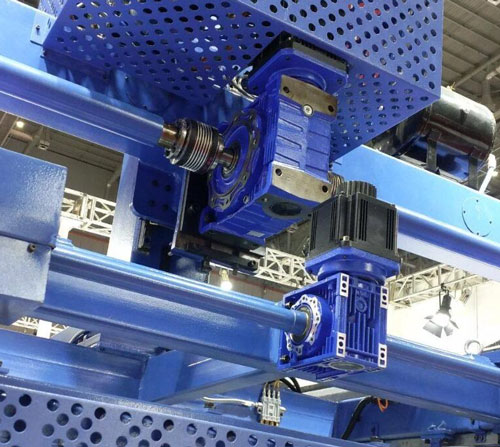
A worm gearbox is a right-angle drive. It consists of a worm shaft (resembling a screw) that meshes with a worm wheel. Because the shafts cross at 90 degrees without intersecting, the worm gear is incredibly compact. It relies on sliding friction, where the worm thread “slides” across the teeth of the wheel to create motion.
The Helical Gearbox Structure
A helical gearbox typically features parallel or offset shafts (though spiral-helical versions exist for right angles). Helical gears have teeth cut at an angle to the axis of rotation. This allows for rolling contact where multiple teeth mesh gradually. Unlike the sliding action of the worm, the helical gear’s rolling action is significantly more mechanically efficient.
Efficiency Comparison
Efficiency is where the worm gearbox vs helical gearbox debate is most prominent. For B2B buyers concerned with total cost of ownership (TCO), this is a critical metric.
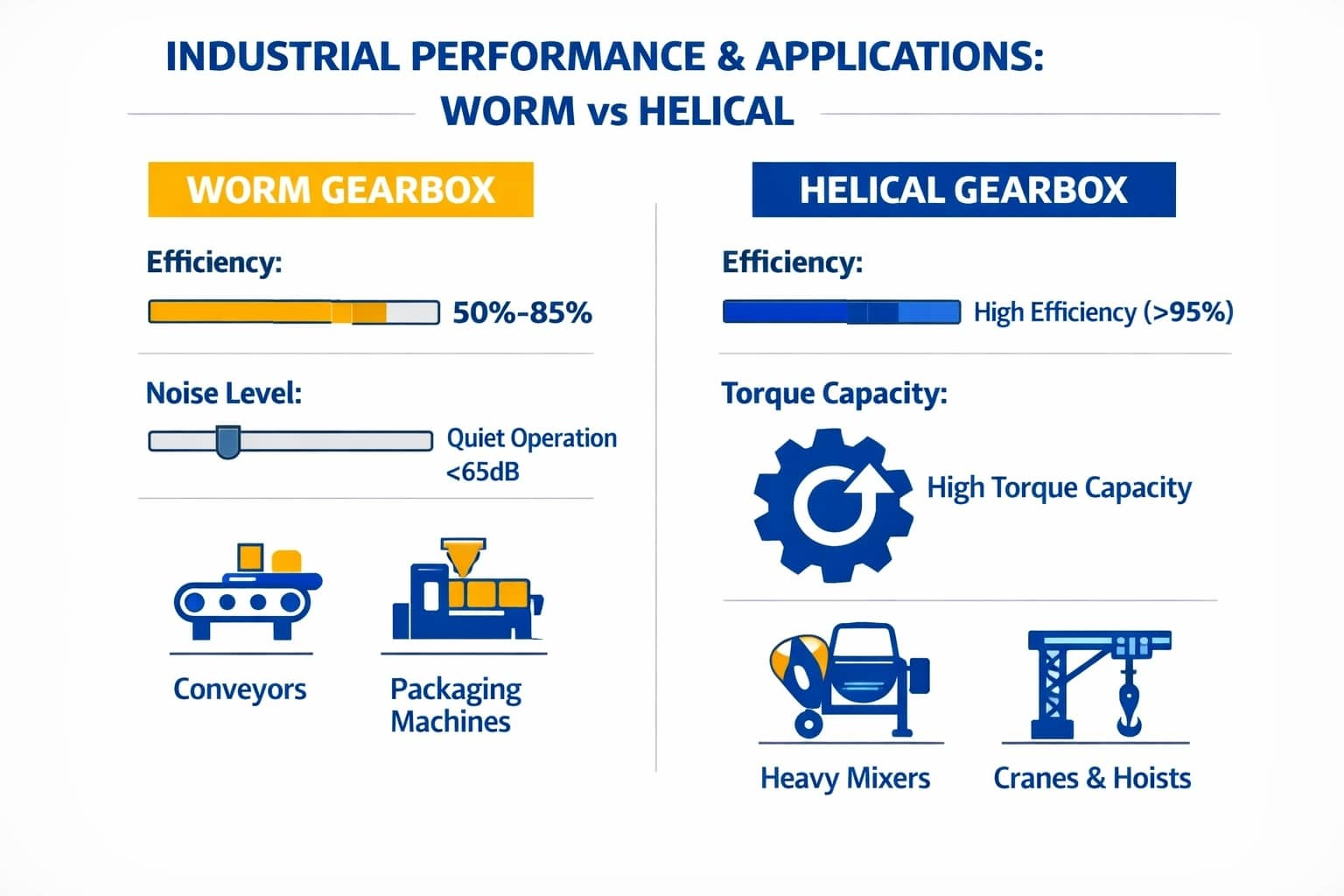
- Helical Gearbox Efficiency: These units are high-efficiency performers, typically achieving 95% to 98% efficiency per stage. Because they use rolling contact, very little energy is lost to heat.
- Worm Gearbox Efficiency: Due to the sliding friction inherent in the worm gear mechanism, efficiency is lower, generally ranging from 50% to 90%. Efficiency drops as the reduction ratio increases.
Why choose the worm despite lower efficiency? While a helical gearbox saves energy, a worm reducer saves space and initial cost. In applications with low duty cycles, the lower efficiency of a worm gearbox is often offset by its compact design and lower purchase price.
Torque Capacity
In a right angle gearbox comparison, torque density—how much torque you get relative to the unit’s size—is a major factor.
- Helical Gearboxes: These are the heavy lifters of industry. They can handle immense torque and high input speeds with minimal wear. However, to achieve a high reduction ratio (e.g., 60:1), a helical gearbox requires multiple stages, making the unit significantly larger and heavier.
- Worm Gearboxes: These excel at providing high torque at low speeds in a single stage. A single-stage NMRV 090 can achieve a 100:1 ratio in a small housing. While they are less efficient at high speeds, their ability to multiply torque in a tiny footprint is unmatched.
Noise Levels
For applications in hospitals, office buildings, or theater stages, noise is a deal-breaker.
- Worm Gearboxes: These are inherently the quietest gearboxes available. The sliding action of the gears eliminates the “clicking” or “clatter” often associated with tooth impact. If your project demands near-silent operation, the worm gear is the standard.
- Helical Gearboxes: While quieter than spur gears due to their gradual tooth engagement, they still generate more noise and vibration than worm units, especially at high RPMs.
Typical Applications
Choosing the right tool for the job is essential. Based on our factory’s data, here is where each technology shines:
When to Choose a Worm Gearbox:
- Conveyors: Especially inclined conveyors where the self-locking feature can prevent backward sliding.
- Packaging Machinery: Where space is at a premium and 90-degree motor mounting is required.
- Food & Beverage: Small mixers and bottling lines where compact, quiet operation is needed.
- Material Handling: Hoists and winches requiring high ratios in a small package.
When to Choose a Helical Gearbox:
- Heavy Manufacturing: Steel mills and heavy-duty crushing equipment.
- High-Duty Cycles: Machines running 24/7 where the 5-10% energy savings of helical gears result in thousands of dollars in annual savings.
- High-Speed Operations: Applications requiring high input and output speeds without excessive heat buildup.
Conclusion: Making the Right Choice
The choice between a worm gearbox vs helical gearbox isn’t about which is “better,” but which fits your constraints. If you need compactness, low noise, and a low initial price, the worm gear reducer is your winner. If your priority is energy efficiency, high speed, and heavy-duty endurance, the helical gearbox is the investment to make.
As a manufacturer, we provide both technologies. We recommend a technical audit before you purchase to ensure your right angle gearbox comparison accounts for service factors, thermal limits, and mounting orientations.
Ready to optimize your drive system? Contact our technical sales team for a side-by-side performance comparison or Download our Full Gearbox Catalog to see the specifications for both NMRV worm and R-Series helical units.